When you turn on the tap water, you’re just thinking about getting water, right? You’re not thinking about what else is in that water. Most water naturally contains the elements calcium and magnesium, but some water has an excess of those. When that happens, it’s called hard water, and according to the U.S. Geological Survey, it exists in more than 85% of the country.
For most of Florida, water is naturally softer than the rest of the country, but central Florida, including Winter Haven and Davenport, along with the northern Atlantic coast, has slightly harder water than the rest of the state. It is common enough around Lakeland and Plant City that most homes we work in show some scale.
How Water Becomes Hard
When rain initially falls, it’s as soft water. As it hits the ground and runs through limestone, it picks up the calcium and magnesium and carries it into streams and lakes, which is to say into our water supply. Florida sits on limestone, which is why the mineral load shows up here at all. Certain parts of the country may have harder water due to the way the water runs through various landscapes and picks up minerals along the way.
Why Hard Water Is Bad for Your Home
Hearing the words calcium and magnesium generally means something good, as both are elements that we need for our overall health. However, when these build up in water, it can lead to other issues.
Hard water can create a residue that builds up on appliances like your washer or dishwasher and you may also see it on your pots and pans. These buildups can also happen within your pipes or other appliances, affecting the efficiency of these. This buildup is referred to as scale and it can even end up damaging appliances. A water heater can see a lot of scale accumulation, meaning your water is not heated as well as it could be and takes up more energy. Scale on the element and in the tank bottom is one of the reasons a tank fails early, and the warning signs your water heater needs replacing show up sooner in hard water areas. Once a tank is scaled and noisy, it is a question of water heater repair or a new tank or tankless water heater.
Installing a water softener is what keeps calcium from building up in your pipes and in appliances like water heaters. Left alone for years, that same scale narrows supply lines to the point where whole home repiping becomes the honest answer.
Hard water contributes to stains in your shower as well. Soap scum and residues can build up and look unsightly, especially if you have a glass shower door, and we have a guide to removing hard water stains from shower glass plus one for rust and mineral deposit stains elsewhere in the house. It can also affect your hair and skin when you’re showering, causing them to dry out more quickly.
The Pros and Cons of Using Soft Water
Soft water doesn’t contain the minerals that hard water does. By using soft water, you can reduce buildup in your appliances as well as stains on your dishes, pots, and pans. It also helps your skin and hair feel better overall because it doesn’t dry them out like hard water does.
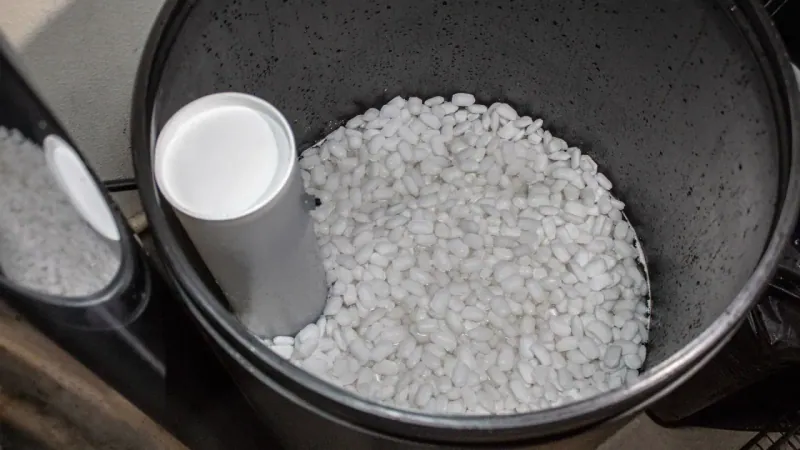
However, soft water comes with its own disadvantages. It has a higher salinity, so it is generally not recommended as drinking water for those with high blood pressure or diabetes. Water is softened using ion exchange, meaning the minerals within the water are replaced with sodium. It is also not the best for watering plants because it can affect the plant’s sodium levels. If the sodium is the sticking point, a salt free water conditioner treats scale without the ion exchange, and many homes pair a softener with under sink drinking water filtration so the kitchen tap stays untouched. Our comparison of water softeners and whole house filtration systems covers which problem each one actually solves.
At True Plumbers & AC, we can help you decide what kind of water will best benefit your home.
Call us today at (863) 667-6364 and we can test your water. If the water is too hard, we can recommend and install a softener, or a whole house filtration system where the problem is sediment and taste rather than minerals, in homes across Lakeland, Plant City, Winter Haven, and the surrounding Florida areas.