
Same-Day AC Repair Across Lakeland and Plant City
When an air conditioner quits in the middle of a Central Florida summer, it is not a minor inconvenience. Our reliable technicians complete air conditioning repairs quickly and will tell you honestly if it is time to consider a replacement instead. Between the relentless heat and the humidity that hangs over Plant City, Lakeland, and Winter Haven for most of the year, your system works harder here than it would almost anywhere else, and small problems escalate fast.
At True Plumbers & AC, we repair all makes and models. Whether your unit is barely keeping up on a 95-degree afternoon or it has stopped cooling altogether, our team diagnoses the real cause rather than guessing at it. We carry a 4.8-star rating across more than 2,100 reviews because we show up, find the problem, and fix it right.
Our services
Why hire True for AC repair
Licensed HVAC (CRC1335717). We find the real fail (clogged condensate, iced coil, capacitor) and quote before we start.
-
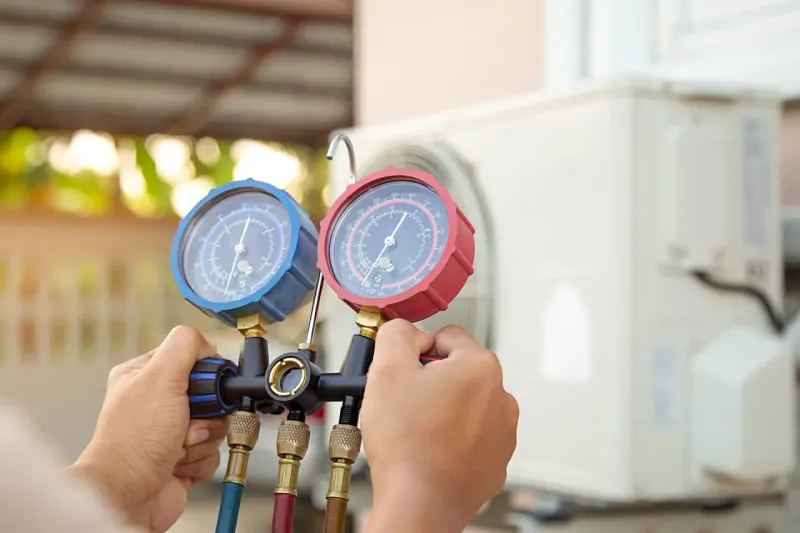
 AC Maintenance A tune-up before the next heat wave. Filter, coils, drain, refrigerant check.
See this service
AC Maintenance A tune-up before the next heat wave. Filter, coils, drain, refrigerant check.
See this service
- AC Installation If the compressor is gone and the unit is old, replacement can cost less than another repair.
See this service
-
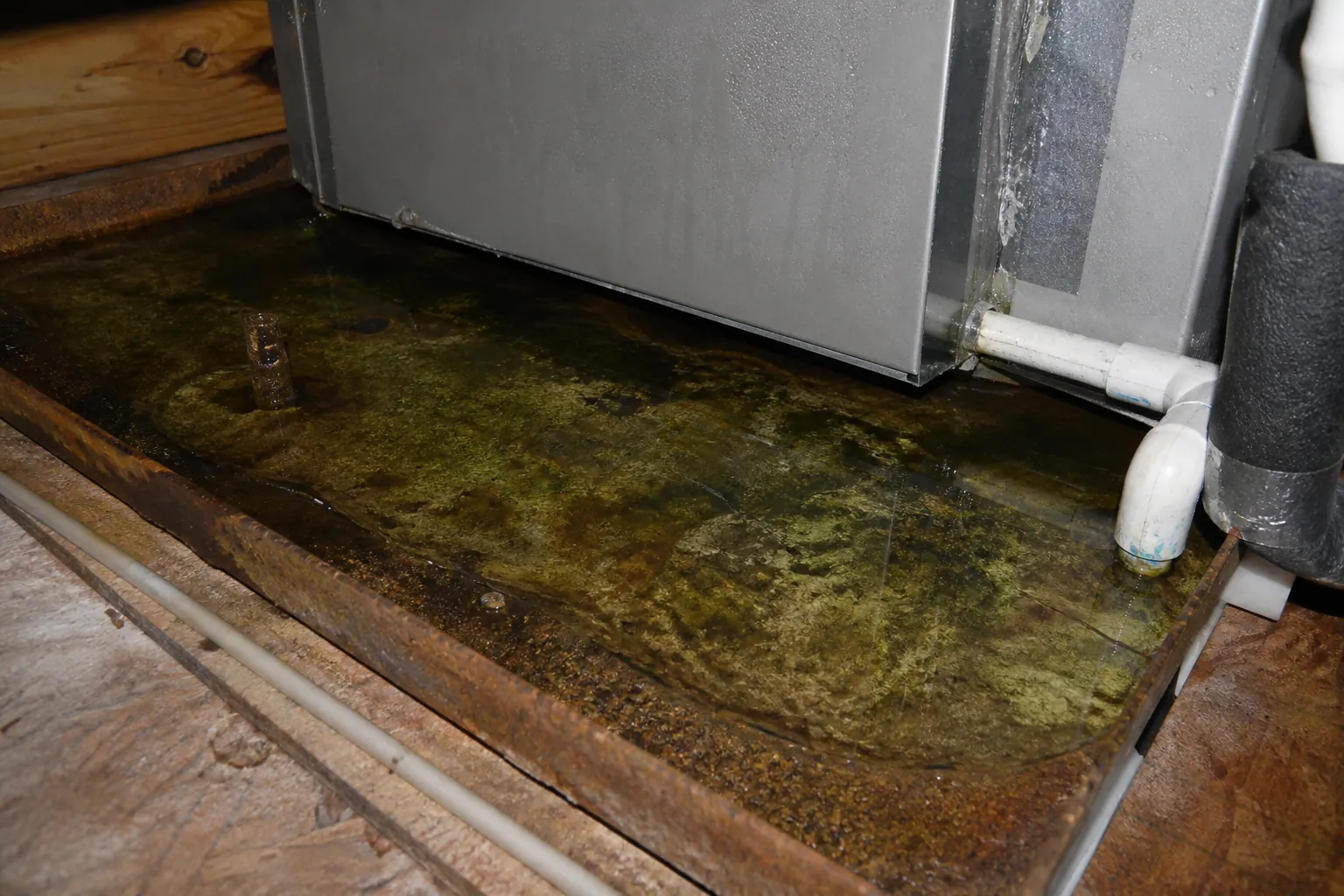
 Water Damage Restoration A clogged condensate line can soak a ceiling. We fix the AC drain and dry the room.
See this service
Water Damage Restoration A clogged condensate line can soak a ceiling. We fix the AC drain and dry the room.
See this service
Key Takeaways
If you are standing in a warm house right now, here is the short version before the detail below.
- Most common failure: A clogged condensate drain line trips the safety float switch and shuts the system off. It is the number one no-cool call we run in Polk and Hillsborough counties.
- The 3 minute rule: Wait at least three minutes before restarting a compressor that just shut off, so pressures inside the system equalize.
- What repairs cost: Angi puts a typical AC repair in the Tampa, Florida metro at $353 on average, within a range of $101 to $3,027. Those are market figures, not our prices.
- Free checks before you call: Reset the breaker, replace a dirty filter, and look for water in the drain pan. Those three cover a real share of summer calls.
- Residential only: We service home and light commercial HVAC systems. We do not repair car air conditioning.
- How to reach us: Call (863) 667-6364 any hour, or book an AC repair visit online.
AC Repair in Lakeland, Plant City and Winter Haven
On a Lakeland no-cool call the first look is usually a clogged condensate drain, a dirty filter, or a failed capacitor. August humidity fills the drain line. A house that ran all week on a packed filter ices the coil. A storm sag kills the capacitor. We check those three before we talk refrigerant. True Plumbers & AC repairs residential air conditioning across Polk County and eastern Hillsborough County, with AC repair in Lakeland, Plant City and Winter Haven as the core of our service radius. We also cover Auburndale, Bartow, Mulberry, Lake Alfred, Dover, Seffner and Brandon, and we reach Zephyrhills and Wesley Chapel to the north.
Cooling equipment ages differently here than it does almost anywhere else. A system in Central Florida runs ten to twelve months a year rather than four or five, so the compressor, capacitors and blower motor accumulate wear on a schedule the manufacturer warranty was never written around. The humidity compounds it. Your air conditioner spends much of its runtime pulling moisture out of the air rather than dropping the temperature, which is why a unit can run continuously on a August afternoon and still leave the house feeling damp at 76 degrees.
The afternoon storm pattern adds its own failures. A system that has been running hard all day gets hit with a voltage sag or a surge when the storm rolls through, and the capacitor is usually what gives out. Salt carried inland on the sea breeze and mineral scale from hard well water both attack condenser coils and shorten their working life, so coil condition is one of the first things our technicians look at on any older outdoor unit.
Because our trucks are based in Plant City and we work the same corridor every day, we are not routing a technician across a metro area to reach you. That is the practical reason we can usually get to a Lakeland or Winter Haven no-cool call the same day it comes in.
AC Symptoms and What They Usually Mean
Most air conditioning complaints fall into six recognizable patterns, and the symptom itself narrows the likely cause considerably. Use the table below to figure out whether you have a two minute fix or a genuine service call. Each row gives the likely cause, the check you can safely make yourself, and the point at which it becomes a technician job.
| Symptom | Likely cause | DIY check or service call |
|---|---|---|
| Not cooling at all, system will not start | Usually a tripped breaker, a blown fuse at the disconnect, or a condensate float switch that has cut power because the drain backed up. | DIY check: reset the breaker once and look for standing water in the drain pan. Call a technician if the breaker trips again, because a breaker that keeps tripping is reporting an electrical fault, not a nuisance. |
| Running constantly but blowing warm air | Typically low refrigerant from a leak, a failed capacitor keeping the compressor from starting, or a badly iced evaporator coil. | DIY check: confirm the outdoor fan is spinning and the filter is clean. Call a technician for anything refrigerant related, because refrigerant is not a consumable and topping it off without finding the leak just buys a few weeks. |
| Short cycling, turning on and off every few minutes | Often an oversized system, a dirty filter choking airflow, a failing capacitor, or a thermostat placed where sunlight hits it. | DIY check: change the filter and confirm the thermostat is not on an exterior wall or above a lamp. Call a technician if it persists after a clean filter, since short cycling wears out a compressor fast. |
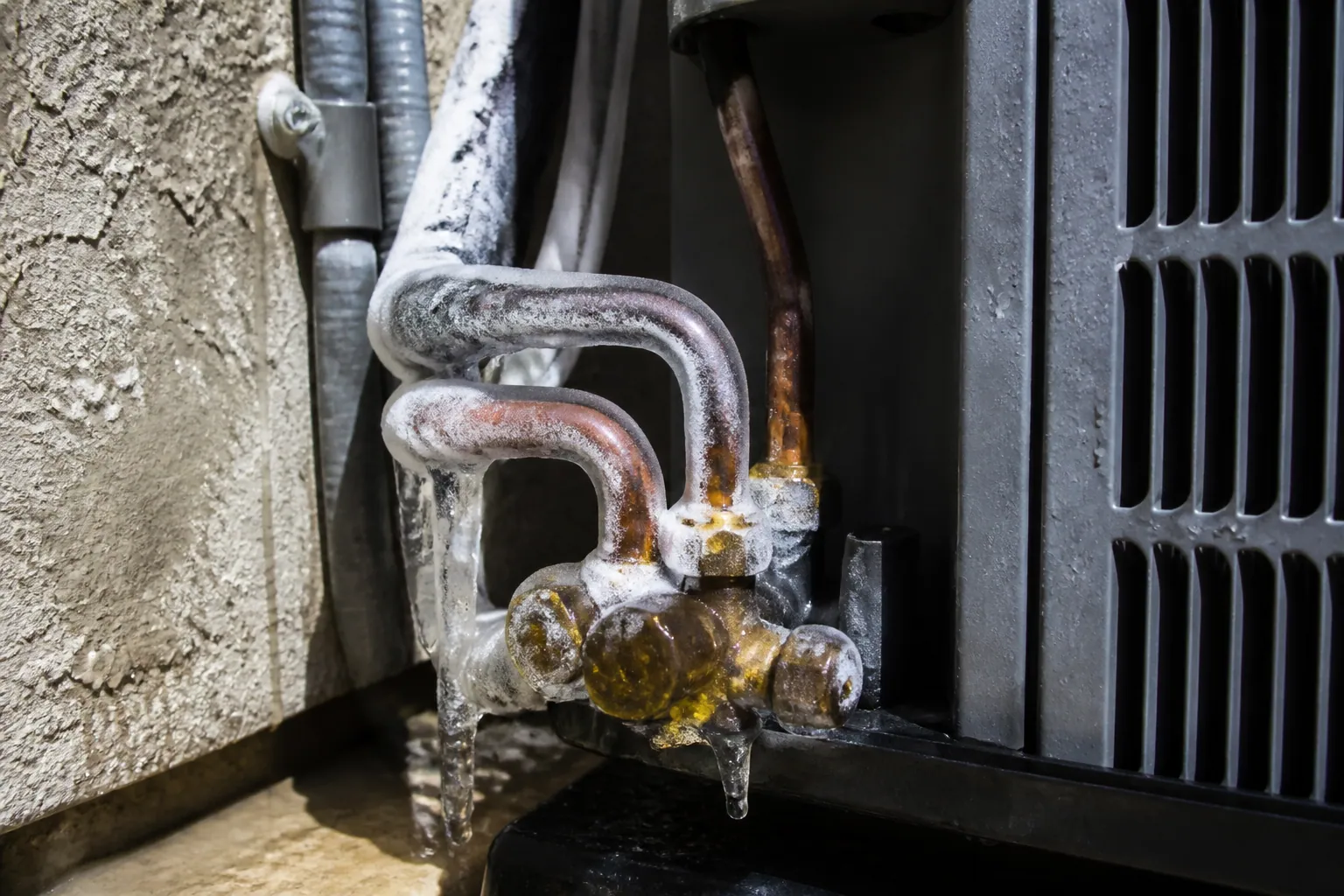
| Freezing up, ice on the copper lines or indoor coil | Restricted airflow from a clogged filter or blocked returns, or low refrigerant. | DIY check: shut the system off, set the fan to ON to thaw the ice, and replace the filter. Call a technician once it is thawed, because ice is a symptom and the underlying cause is still there. |
| Water leaking around the indoor unit | Almost always a clogged condensate drain line, sometimes a rusted drain pan or a frozen coil that has thawed. | DIY check: look for water in the secondary pan and shut the system off so it stops producing condensate. Call a technician promptly, because an air conditioner can cause real water damage to ceilings and flooring once a drain backs up. |
| Strange smells from the vents | A musty or sour smell points to mold or standing water in the drain pan or ductwork. A burning or hot electrical smell points to a motor or wiring problem. | DIY check: replace the filter and see whether a musty smell clears. Call a technician immediately for any burning or electrical odor and shut the system off at the breaker first. |
When to Stop Troubleshooting and Call a Technician
Some symptoms are worth ten minutes of your own time. Others mean the next step should be a licensed technician rather than another attempt. Call us if any of the following is true.
- The breaker trips more than once after you reset it.
- You smell anything burning, hot, or electrical from the vents or the air handler.
- Ice keeps returning after you have thawed the system and installed a clean filter.
- You hear a hard clicking or humming from the outdoor unit while the fan sits still.
- Water is reaching drywall, ceiling or flooring rather than staying in the pan.
- The system is more than ten years old and this is the third repair call in two seasons, which is the point where AC installation and replacement deserves a serious look.
Air Conditioning Repair in Central Florida: Fast, Reliable Service
Florida humidity puts a unique strain on cooling equipment. Your air conditioner is not only fighting the heat, it is constantly pulling moisture out of the air, and that extra workload wears on components year after year. A system that struggles to keep up is often telling you that something inside needs attention before it fails completely.
We approach every repair as a top-rated A/C specialist serving Plant City, Lakeland, Winter Haven, and the nearby communities. The goal is always to get you cooling again the same day when possible, and to be straight with you about whether a repair or a replacement is the smarter long-term call.
Is Your Air Conditioner on the Fritz?
A proper diagnosis starts with a complete inspection, not a quick look at the thermostat. Our technicians check the evaporator and condenser coils, examine the air filter, test the electrical components, verify the thermostat is reading and signaling correctly, and assess refrigerant levels for any sign of a leak.
Once we understand the condition of the system as a whole, we walk you through what we found and recommend any maintenance that will keep the unit running reliably after the immediate repair is done. You get the full picture, not a single part swapped in isolation.
Common Air Conditioning Problems We See
Most cooling failures we respond to in Central Florida trace back to a handful of recurring culprits. If your unit is cooling less than it used to or making unusual noises, it is worth calling a technician before the problem spreads to more expensive components.
- Clogged or dirty air filters. The filter is a critical component, and over time it becomes dirty or clogged, which forces your unit to work harder. That leads to a higher energy bill and the potential for damage.
- Refrigerant leaks. Warmer air at the register, water under the unit, ice on the coils, or a hissing sound can all signal a refrigerant leak. When refrigerant is low, your house simply will not cool effectively.
- Dirty evaporator coils. Like the filter, a properly functioning evaporator coil is critical to your unit. It accumulates dirt over time and needs to be cleaned periodically.
- Blocked condensate lines. The cooling process produces condensation, and the condensate line carries that water away from the unit and your house. When it blocks, the safety float switch shuts the system down, and left alone it can cause water damage and harm the unit itself.
What Is the Most Common AC Problem in Florida Homes?
The most common AC problem in Florida homes is restricted airflow and drainage failure, and in practice that means a dirty filter or a clogged condensate drain line. Neither is a glamorous diagnosis, and both account for more summer no-cool calls in our service area than compressor failures and refrigerant leaks combined.
The reason is the humidity. A Central Florida air conditioner pulls a remarkable volume of water out of the air every day, and all of it has to travel through a narrow PVC drain line to get outside. Biological slime builds up in that line, the water backs up, the safety float switch does exactly what it was designed to do, and the system shuts itself off before the overflow reaches your ceiling. Homeowners read that as a dead air conditioner. It is usually a plugged pipe.
Dirty filters are the companion problem. Because the system runs nearly year round here, a filter loads up faster than the ninety day label suggests, and a choked filter starves the evaporator coil of airflow until it ices over. If you want the longer explanation, we cover it in our guide to changing your air conditioner filter and in our roundup of common air conditioner problems and how to fix them.
Both failures are preventable, which is the whole argument for annual AC maintenance. Clearing the drain line and checking static pressure takes a technician minutes during a tune-up and costs a great deal less than an emergency visit in the third week of August.
What Is the 3 Minute Rule for Air Conditioners?
The 3 minute rule for air conditioners is simple: after the system shuts off, wait at least three minutes before starting it again, so the refrigerant pressure inside the compressor has time to equalize. Restarting sooner forces the compressor to fight against high head pressure, which can trip the breaker, overheat the motor windings, or in the worst case damage the compressor outright.
This matters most in two situations. The first is a storm related power flicker, where the system cuts out and comes straight back. Most modern thermostats and control boards include a built in delay for exactly this reason, which is why your air conditioner sometimes appears to do nothing for a few minutes after an outage. It is protecting the compressor, and it will start on its own.
The second is a homeowner cycling the thermostat up and down while troubleshooting. If you have just switched the system off to check a filter or a breaker, give it the full three minutes before you call for cooling again. A compressor is the single most expensive component in the system, and a three minute pause is free insurance.
You will sometimes hear a competing version of the 3 minute rule applied to thermostat settings rather than restarts. The restart definition is the one HVAC technicians use, and it is the one worth remembering.
What AC Repair Costs in Central Florida
A typical air conditioning repair averages $353 in the Tampa, Florida market, with published figures running from $101 for a small fix to $3,027 for a major component. Angi publishes cost data for this metro, so the table below carries local rates.
They are here to help you sanity check a number, not to price your repair. Our actual pricing is given to you in person, in writing, before any work begins.
| Repair | Market range | Source |
|---|---|---|
| Typical AC repair job | $353 on average, within a full range of $101 to $3,027 | Angi, Tampa FL cost data |
| Diagnostic or service call fee | $75 to $200, built into the cost of the repair | Angi, Tampa FL cost data |
| Hourly labor rate | $50 to $150 per hour | Angi, Tampa FL cost data |
| Capacitor replacement | $100 to $400 | Angi, Tampa FL cost data |
| Refrigerant leak repair | $225 to $1,600 | Angi, Tampa FL cost data |
| Refrigerant leak detection on its own | $100 to $330 | HomeGuide, national range |
| Compressor replacement | $1,350 to $2,300 | Angi, Tampa FL cost data |
| Evaporator or condenser coil replacement | $650 to $4,900 | Angi, Tampa FL cost data |
| Blower or fan motor | $360 to $4,900 | Angi, Tampa FL cost data |
| Condensate drain line cleaning | $75 to $250 | Angi, Tampa FL cost data |
| After hours and emergency service | Adds $40 to $80 per hour on top of the standard rate | Angi, Tampa FL cost data |
| Permit fee on larger repairs | Starts at $125 | Angi, Tampa FL cost data |
Sources: Angi HVAC repair cost data published for Tampa, Florida, plus one national HomeGuide range where no Tampa figure exists. These are third-party market ranges, not quotes from True Plumbers & AC.
Get a Real Price Before Any Work Starts
The ranges above are industry research. Your repair is a specific system in a specific house, and the only number that matters is the one written on your estimate. A licensed technician diagnoses the fault at your home, explains what failed and why, and quotes the exact price for the fix. Nothing begins until you approve it, and there is no charge for changing your mind.
If a repair turns out to be large enough that replacement is the better value, we will say so plainly and show you both numbers side by side. For bigger jobs, HVAC financing options are available, and True Home Membership members receive a discount on repairs along with priority scheduling. Call (863) 667-6364 or request a visit through our online scheduler.
Emergency and After Hours AC Repair
We answer AC calls around the clock, every day of the year, because a failed air conditioner in a Central Florida August is a health issue rather than a comfort inconvenience. Call (863) 667-6364 at any hour and you will reach a real dispatcher who takes the details and gets a technician assigned.
We do not publish an arrival window, and you should be skeptical of any company that guarantees a specific one during peak season. What we will do is give you an honest estimate of timing when you call, and tell you if the wait is going to be long rather than leaving you guessing. Households with infants, elderly residents or medical equipment should say so on the call, because it affects how we prioritize the route.
While you wait, close blinds on the sun facing side of the house, run ceiling fans to move air across skin, and keep the system off if it has iced over so the coil can thaw. Our guide on keeping your home cooler without touching the thermostat covers a few more that genuinely help.
True Plumbers & AC has served Central Florida since 2009 under Florida HVAC license CRC1335717, and our technicians work under that license on every call.
We Repair Home AC Systems, Not Car Air Conditioning
One clarification that saves everyone a phone call: True Plumbers & AC services residential and light commercial HVAC systems. We do not repair automotive air conditioning. If the air conditioning in your vehicle has stopped working, an auto repair shop is who you want.
This comes up constantly because searches for AC repair in Lakeland and Plant City return automotive shops alongside home HVAC contractors, and the two trades share almost nothing beyond the word refrigerant. Home systems are stationary, ducted, tied into your electrical panel and permitted under the Florida Building Code. Vehicle systems are none of those things.
What we do cover is the full range of home comfort equipment: central split systems, heat pumps, ductless mini splits, air handlers, thermostats, whole home dehumidifiers and indoor air quality equipment.
Should Your A/C Unit Be Repaired or Replaced?
Not every breakdown justifies a full replacement, but not every aging unit is worth repairing again either. When we evaluate the question, we weigh the cost of the repair against the age and overall condition of the system, the efficiency you are losing, and how often you have been calling for service.
Because units run nearly year-round here, they age faster than the calendar suggests. Our technicians give you an honest assessment so you can decide with the real numbers in front of you rather than a sales pitch.
Do Not Live in the Florida Heat With a Broken Air Conditioner
A failed air conditioner in this climate is a comfort problem and, for many households, a safety one. As a top-rated A/C specialist in the Central Florida area, we serve Lakeland, Plant City, Winter Haven, and the surrounding communities, and we are ready when you need us.
Call (863) 667-6364 and we will get a technician out to diagnose the issue and restore your cooling. If your system is still running but not quite right, the signs your AC needs a tune-up are worth reading before the next heat wave, because catching a weak capacitor in April is a very different conversation than catching it in August.