
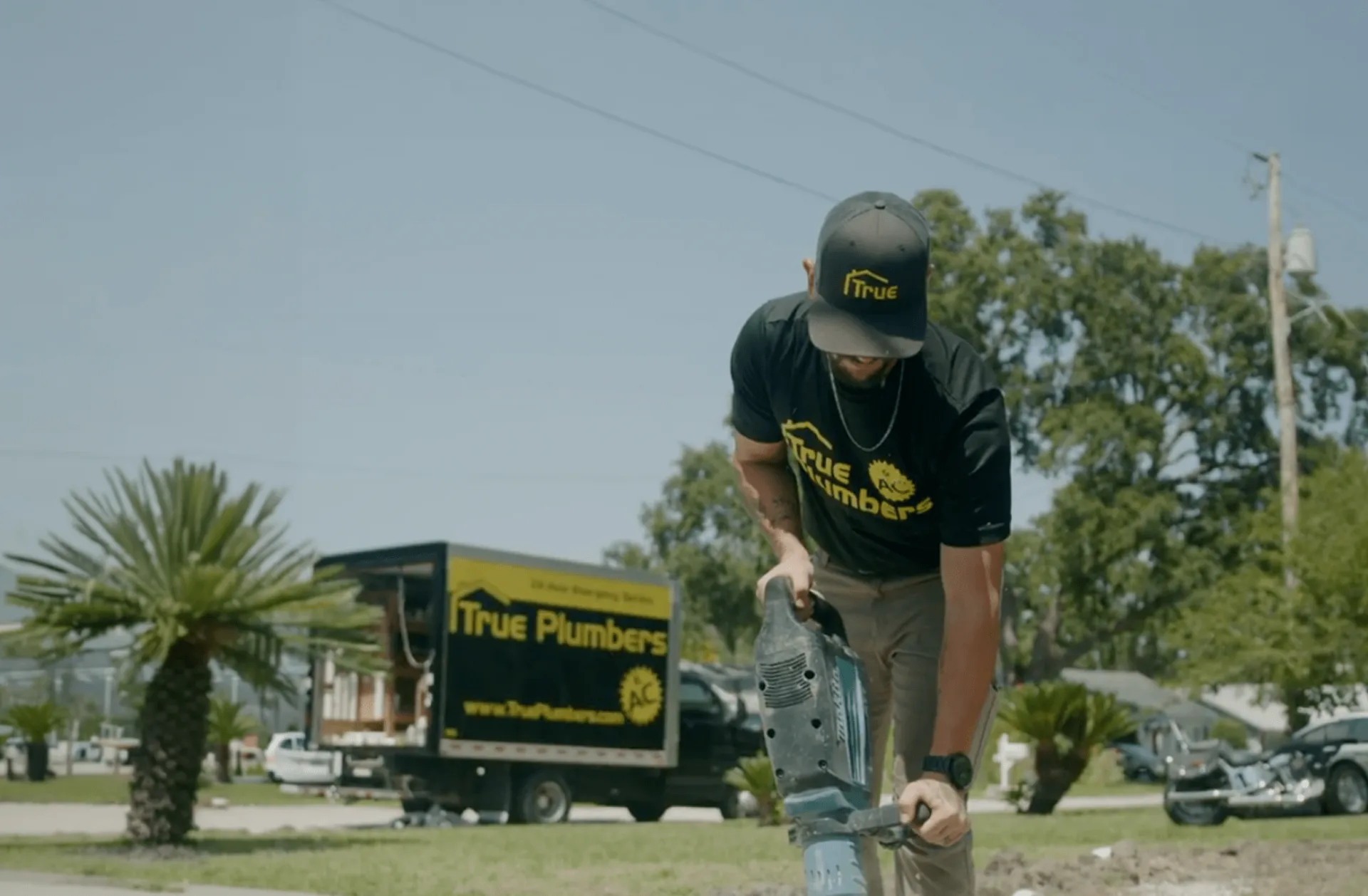

How Our Water Softeners Tame Florida Hard Water. Florida's hard water is rough on pipes, fixtures, and appliances. See how a True Plumbers water softener protects your whole home.
Read the transcript ▼
The u.s. consumes around 15 billion gallons of bottled water per year plumbers make up 1% of the world's workforce here at true plumbers you can trust our water treatment system in your home so you can enjoy bottled water quality straight from every tap for a free water test in your home or business call true plumbers today
Water Softener Installation & Repair Services in Central Florida
Lakeland and the rest of Central Florida sit on the Floridan Aquifer, and the water that comes out of it carries dissolved calcium picked up from limestone. That is the hardness behind your spotted glassware, the film on the shower door, and the scale quietly building inside your water heater. A softener removes those minerals before they reach anything.
True Plumbers & AC is a licensed plumbing contractor that installs and repairs water softeners across Lakeland, Plant City, and the surrounding communities, under Florida license CFC1428965 and in business since 2009. That matters more than it sounds: a softener is a plumbing installation, tied into your main line, and the same crew that installs it can also fix what hard water already did to your pipes and fixtures.
Key Takeaways on Hard Water and Softeners in Lakeland
Lakeland water is hard, the city publishes how hard, and the figure is lower than most of what you will read online. Start here.
- Lakeland water is moderately hard to hard: the city reports 108 mg/L total hardness at its Combee plant and 126 mg/L at Williams, which is roughly 6 to 7.5 grains per gallon.
- Ignore the inflated numbers online: figures of 20 to 30 grains per gallon circulate for Lakeland and are around triple what the city itself reports for treated water.
- A softener and a filter do different jobs: softeners remove hardness minerals, filters remove chlorine, taste, odor, and sediment. Many homes want both.
- Market cost, not our price: national guides put a salt-based softener at roughly $1,200 to $3,800 installed (HomeGuide, 2026).
- Test first: we offer free in-home water testing, and on a private well a test is the only meaningful starting point.
- Repair is often the answer: a softener that stopped working is frequently a stuck valve or a salt bridge, not a dead system.
Does Lakeland FL Have Hard Water?
Yes, Lakeland has hard water, though not as hard as the internet claims. City of Lakeland Water Utilities draws its raw water from wells averaging about 750 feet into the Floridan Aquifer, and at that depth the water has spent a long time in contact with limestone, which is calcium carbonate. It dissolves the rock on the way through and delivers the calcium to your house.
The city publishes the numbers. In its water quality data, finished water from the Combee treatment plant tested at 108 mg/L total hardness with 74 mg/L calcium hardness, and finished water from the Williams plant tested at 126 mg/L total hardness with 91 mg/L calcium hardness (City of Lakeland Water Utilities, 2023 figures). Converted to the grains per gallon that softener equipment is rated in, that is roughly 6 to 7.5 grains per gallon, which lands in the moderately hard to hard band.
That is worth stating plainly because you will see much higher numbers quoted for Lakeland online, sometimes 20 to 30 grains per gallon. We could not verify that against any City of Lakeland source, and 20 to 30 grains would work out to well over 340 mg/L, far above what the city reports for treated water. Sizing a system off an inflated hardness number means paying for capacity you do not need.
If you are on a private well rather than city water, none of the above applies to your tap. A private well is untreated, so your hardness, iron, and sulfur numbers are your own, and the only way to know them is a test.
Water Hardness by City: Lakeland, Plant City, and Central Florida
Hardness across our service area comes from the same source, which is why the symptoms look the same from Lakeland to Winter Haven to Davenport. Every municipal system in the region pulls from the Floridan Aquifer and every one of them is treating limestone-derived calcium.
We publish a real number only where the utility publishes one. For Plant City, Zephyrhills, and the other communities we serve, we would rather test your tap than quote a figure we cannot source, and the number that actually sizes your system is the one measured at your house anyway.
- Lakeland, city water: 108 mg/L at the Combee plant and 126 mg/L at the Williams plant, roughly 6 to 7.5 grains per gallon (City of Lakeland Water Utilities, 2023 figures).
- Other municipal systems in the region: same aquifer, same limestone, same category of problem. Ask your utility for its published hardness or let us test.
- Private wells anywhere in Polk, Hillsborough, or Pasco: untreated and highly variable. Iron and sulfur odor are common alongside hardness, and city figures tell you nothing.
- Newer subdivisions: hardness is set by the utility, not the age of the house, so a new build gets the same water as the one next door.
Free In-Home Water Testing Across Lakeland and Plant City
We test your water for free, in your home or business, before we recommend anything. The test gives us your grains per gallon, which sets the resin capacity your system needs, and it flags iron or sulfur odor that a plain softener will not fix.
Sizing a softener without a test is guessing. Undersize it and the resin exhausts before the next regeneration and you get hard water at the end of every cycle. Oversize it and you paid for capacity you will never use and the system regenerates less efficiently. Call (863) 667-6364 or book the water test online.
Ion Exchange, Salt-Free, or Reverse Osmosis: Which One Do You Need
Pick ion exchange if you want hardness actually removed, salt-free if you want to stop scale without adding sodium, and reverse osmosis if the goal is drinking water quality rather than whole-house scale control. They are three different jobs and homeowners routinely buy the wrong one.
The distinction that trips people up most is that a salt-free system is a conditioner rather than a true softener. It changes the crystal structure of the minerals so they stop sticking to surfaces, but the minerals are still in the water, so you will not get the slick, sudsy feel a salt-based unit gives you. For a household that mainly wants to stop scale and skip the salt hauling, that trade is usually worth it.
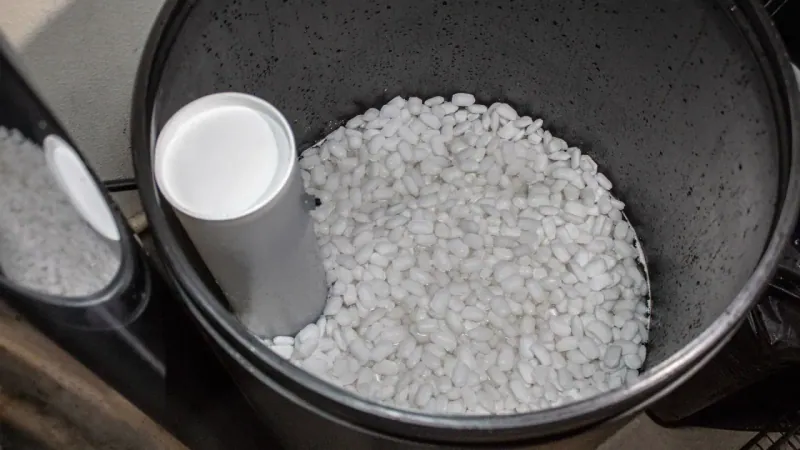
- Ion exchange, salt-based: the true softener. Resin swaps calcium and magnesium for sodium and regenerates with a salt solution. Choose it for maximum hardness removal, soft-feeling water, and the longest appliance protection. Requires salt and a drain line.
- Salt-free conditioner: no sodium added, no regeneration, almost no upkeep. Choose it to prevent scale without maintaining a brine tank. See our salt-free water softener systems for how the two-tank KDF and carbon setup works.
- Reverse osmosis: a semi-permeable membrane removes 98% of total dissolved solids through one to three filter stages. Choose it for drinking and cooking water. Usually installed as under-sink filtration rather than for the whole house.
- Whole-house carbon filtration: not a softener at all. Choose it for chlorine, taste, odor, and chemicals. Compare the two in water softeners versus whole-house filtration systems.
- A softener plus a filter: the common answer for Central Florida homes that want both scale control and better tasting water. Whole-house filtration pairs with a softener rather than replacing it.
Water Softener Cost in Central Florida: Third-Party Market Ranges
Use the table below to sanity check the bids you receive. What moves your real number is your measured hardness, your household size, where the unit has to go, and whether there is a drain within reach of the brine tank.
| System or line item | Market range | Source |
|---|---|---|
| Salt-based ion exchange system, installed | Roughly $1,200 to $3,800 | HomeGuide, 2026 water softener cost guide |
| Salt-free system, installed | Roughly $1,500 to $4,500 | HomeGuide, 2026 |
| Dual-tank system, installed | Roughly $1,700 to $5,000, for households that need soft water even during a regeneration cycle | HomeGuide, 2026 |
| Equipment alone, before labor | Roughly $700 to $3,500 at retail for the mineral tank, brine tank, resin, and control valve | HomeGuide, 2026 |
| Standard professional installation labor | Roughly $500 to $1,200 | HomeGuide, 2026 |
Source: HomeGuide, 2026. These are general third-party market figures published for the United States. They are not True Plumbers & AC pricing and they are not a quote.
What Your Softener Will Cost With True Plumbers & AC
We give you a firm price before any work begins, based on your tested hardness and your actual install location. Nothing starts until you have approved it, and we do not send a technician to quote a system without testing the water first.
New installations carry a one-year workmanship warranty, and manufacturers typically provide a five-year warranty on the head, excluding seals, and a 10-year warranty on the fiberglass tank. Financing on approved credit is available, and True Home Membership members get priority scheduling and no dispatch fees.
Signs Your Water Softener Needs Repair Rather Than Replacement
A softener that stopped producing soft water is usually repairable, and the most common causes are cheap to fix. Before anyone sells you a new system, the salt level, the brine tank, and the control valve should all be checked, because a large share of the calls we run come down to one of those three.
The clearest tell is a salt bridge, which is a hard crust that forms across the top of the salt in the brine tank with an air gap underneath. The tank looks full, but no brine is being made, so the resin never regenerates and hard water starts coming through. Break the bridge and the system works again.
- Repair: the brine tank looks full but the water turned hard. Almost always a salt bridge or a salt mush layer at the bottom.
- Repair: the system runs a regeneration cycle constantly or never. That is a control valve or timer fault, not a dead system.
- Repair: water is running to the drain continuously. Usually a stuck valve, a fouled injector, or a failed seal.
- Repair: salt use suddenly changed with no change in household use. Something in the metering is off.
- Repair: a leak at a fitting or a cracked bypass. Standard plumbing work.
- Replace: resin beads showing up in your faucet aerators. The resin bed has broken down and the unit is finished.
- Replace: a cracked mineral tank, or a system past its warranty that has needed several repairs in a row.
- Neither: if the water tastes or smells bad but is not scaling, the issue is filtration rather than softening, and a softener will not fix it.
What Hard Water Is Doing to Your Plumbing Right Now
The visible damage from hard water is cosmetic and the expensive damage is hidden. Spots on glass and film on tile are annoying, and removing hard water stains from shower glass and removing rust and mineral deposit stains will handle the surface. What you cannot see is scale narrowing supply lines and coating the inside of your water heater.
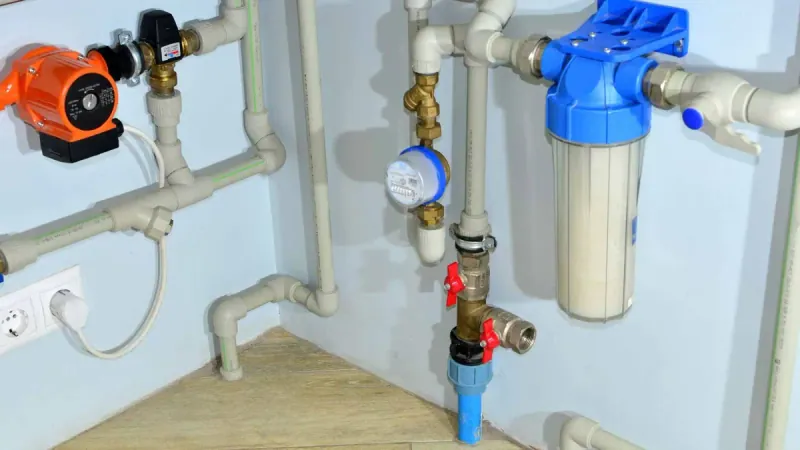
That last one is where the money goes. Sediment collects at the bottom of a tank and insulates the burner from the water above it, so the unit runs longer for every shower and fails years before it should. Softening the water is one of the cheapest ways to protect a heater, whether that means repairing the one you have or getting more life out of a new water heater installation. How hard water could be harming your home covers the rest of the damage, and in older houses that have been scaling for decades, repiping is sometimes the honest recommendation.
When to Call a Plumber About Hard Water in Lakeland or Plant City
Any of the following is a good reason to have the water tested and a plumber take a look.
- Soap and shampoo will not lather: hardness minerals are binding the soap before it can foam.
- White crust on faucet aerators and shower heads: calcium precipitating out as the water evaporates.
- Glassware comes out of the dishwasher spotted no matter what you do: classic hardness, and rinse aid only masks it.
- Laundry feels stiff and colors fade fast: minerals staying in the fabric through the rinse.
- Your water heater rumbles or pops: sediment on the tank bottom, and the heater is already losing efficiency.
- Water pressure dropped gradually over years: scale narrowing the supply lines, which is a plumbing problem rather than a utility one.
- You just moved onto a private well: test before you assume anything, because well water is a different problem from city water.
- Your existing softener stopped working: call before replacing it, since most of these are repairs.
Water Softener Installation and Repair Across Central Florida
We install and service water softeners throughout Lakeland, Plant City, Winter Haven, Zephyrhills, Wesley Chapel, Davenport, and the surrounding Polk County, eastern Hillsborough County, and southeastern Pasco County communities.
Start with the free water test. Call (863) 667-6364 and we will tell you what is actually in your water before anyone talks to you about equipment.
More from the field

Neal Family Water Softener Testimonial. Ashley Neal moved back to Lakeland, the well water smelled bad, and her husband called True Plumbers for a water softener. She tells the story herself, including going to high school with Issac.
Read the transcript ▼
my name is Ashley Neil and I just moved back to Lakeland and we just used true plumbers to put in a water softener system at our new home whatever we got here the water smelled bad I mean you could tell that it was a septic system you could tell it was on a will my husband went out on his own to find a company to do this and he came out in the living room one day and said hey I just called somebody to put in a water softener and I said well could you call and he said true plumbers and I said why didn't you tell me you know I went to high school with Issac so I've known him for a little over 20 years now my first impression of the true plumbers team was that they are very concerned that we know what's going on at all times with the work that they're doing at our house they're very polite very professional my favorite thing about the troop honors team is that they always make me aware of everything that's going on we know that we may be having to replace some cast-iron drain lines in our house and they talked about the process from start to finish what would have to be done and made us feel very confident that they were the company that we would like to use I think the most important thing for other people to know about the true plumbers team is that they're very knowledgeable when you buy a new house it's kind of scary whenever something pops up that you don't know how to handle so it's very important for somebody to come in and tell me what needs to be done so that I feel confident you know that I'm gonna be in a home that safe I would definitely recommend your plumbers to my friends and family one of the really cool features that they have is right before a job gets done in your house they send out a text message with the plumbers profile so you know exactly who's coming to your house I'll definitely be leaving a five-star review for true plumbers I really appreciate how professional they were and how quick they always are to respond to any questions that I have