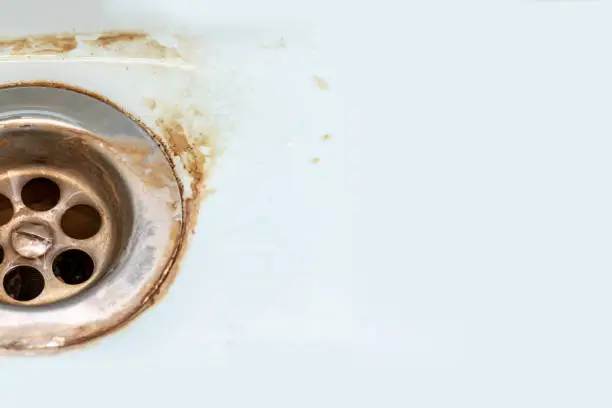
Most homes in the Lakeland and Plant City, FL areas have hard water, which means our water carries a high mineral content. Because of that, rust and mineral deposit stains show up in sinks, toilets, and bathtubs and make them look unsanitary and old. There are several methods that work for getting rid of these stains and keeping them away. Here are our tips.
Avoid Using Harsh Chemicals
Natural methods are generally the better choice, because harsh chemicals damage pipes over time and are safer for your family, pets, and household surfaces when you leave them on the shelf. Never mix cleaners: vinegar or any acid combined with a bleach-based product releases toxic chlorine gas. Work on one product at a time, rinse between them, and keep the bathroom ventilated.
The same rule applies inside the drain. Caustic openers eat at older pipe, and our post on what happens when Drano sits in a drain too long explains why we would rather send a technician than a bottle.
Scrub with Shaw Pads
These environmentally friendly pads are inexpensive and simple to use, with no chemicals involved, and they are safe for septic systems.
Shaw pads come with a short handle and a special pad. Wet the pad and use short, strong strokes to remove the buildup. When you are finished, flush the toilet and enjoy the clean bowl.
Use a Pumice Stick
A pumice stick works on rust and mineral stains in vitreous porcelain, which is what most toilet bowls are made of. Wet the bar and rub it back and forth on the stain until it develops a paste, then rinse the surface. Do not use pumice on enameled steel, acrylic, fiberglass, or a chrome fixture; it will scratch all four. Test an out-of-sight spot first if you are not sure what you have.
Apply Vinegar or Lemon Juice
Any natural acidic element helps reduce rust and mineral stains. Use full-strength white vinegar directly on the affected area. Keep the area wet and let it sit for a few hours until the stain starts to dissolve, then wipe it away.
Clean mineral deposits as soon as you see them. The longer stains build, the harder they are to remove. The same trick works on shower doors, and we have more on removing hard water stains from shower glass.
Mix Baking Soda and Water
For extremely tough stains, a paste of warm water and baking soda will do the trick. Mix the two, rub the paste over the stain, let it sit for ten minutes, and wipe it away with a soft sponge or cloth. Keeping the tank clean helps too, and here is how to clean a toilet tank and why you should. If the staining comes with a running or weak flush, that is a toilet repair rather than a cleaning problem.
Invest in a Water Filtration System
Scrubbing treats the symptom. To stop the staining, treat the water. Hard water is doing more than marking your fixtures: our post on how hard water could be harming your home covers the scale building inside your pipes and water heater, and in older homes that scale is part of what eventually leads to repiping.
Two fixes handle it. A water softener pulls out the calcium and magnesium that leave the deposits, and a whole house water filtration system takes on iron, chlorine, and sulfur along with them. If you would rather not add sodium to your water, a salt-free water conditioner is the alternative, and an under-sink filtration system handles drinking water at one tap. Our comparison of water softeners and whole-house filtration systems walks through which one suits which water.
Do you know a few other tricks? If so, we want to hear about them. Let us know what you use to get rid of these stains, or call True Plumbers & AC at (863) 667-6364 to have your water tested.