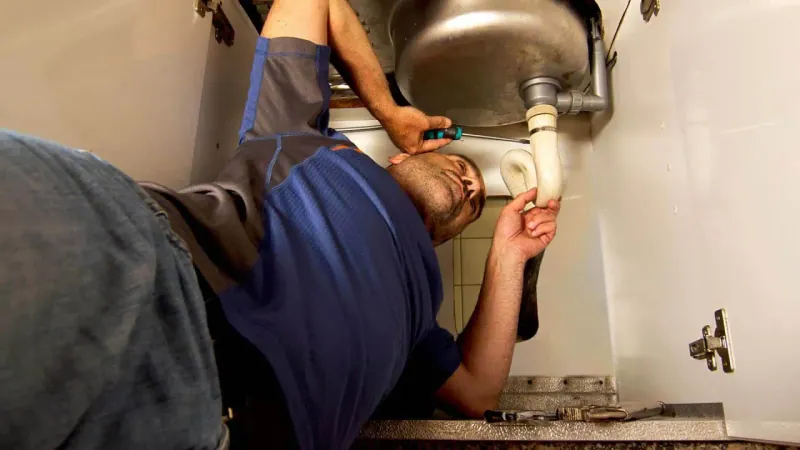
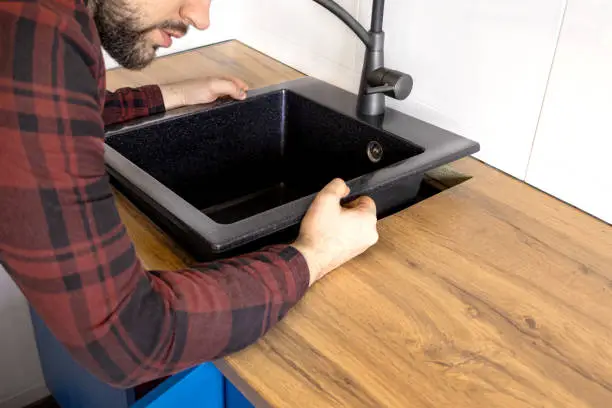
You have a slow draining sink when your sink is not draining efficiently for longer than two minutes.
There could be several issues causing a slow-running drain on your sink.
So, it is time to figure out what could be the cause and find out how to solve the problem.
While there is no particular solution for clearing a clogged sink, you have various options to try.
You can choose to start with the easiest option.
Some of the effective options for clearing a clogged sink include the use of vinegar or baking soda. Skip the bottled chemicals, for the reasons in why store bought drain cleaners are a bad idea.
Below is how to fix a slow-draining sink. If none of it works, professional drain cleaning clears the line properly.
1. Clean the Sink Stopper
The sink stopper is inclined to catch hair and other debris owing to its position at the mouth of the drain.
The trapped fragments can get big, leading to a slow drain. Hair is the usual culprit in a bathroom sink, and it is worth knowing what actually eats through hair in a drain before you reach for anything harsh.
You can easily unscrew the modern sink stopper for cleaning.
You can follow the instructions below to remove the sink stopper for cleaning:
- Check underneath the sink where it connects with the pipe. You will see a rod, nut, and clip.
- Using pliers, turn the nut to unfasten it. Squeeze the clip to free the small rod, then lift the stopper from the drain.
- Use a rag to remove and clean dirty grunge and residues thoroughly.
2. Melt the Sludge
When slimy dirt coats the inner side of your sink’s drainpipe, it narrows the opening.
Thus, this leads to slow drainage.
You can easily dislodge the residue using ordinary household items such as:
- Empty one-and-half cups of baking soda into the drain. Add one-half cup of white vinegar.
- The fizzing and bubbling reaction will assist in breaking up small clogs.
- Ensure the drain is blocked with a rag, so the reaction does not bubble out.
- Wait 15 minutes before flushing with very hot tap water. Use hot tap water rather than boiling water if your drain line is PVC, since boiling water can soften and deform plastic joints.
Grease is not the only thing that narrows a pipe. Mineral scale builds a hard crust inside the line, which is one of the ways hard water quietly harms the rest of the home, and a whole home water softener stops it at the source. If the gunk sits in the curved section under the basin, the trap is what needs cleaning, and a P-trap does a job worth understanding before you take it apart.
3. Use a Sink Plunger
At times the clog may be far down the drain where ordinary drain-cleaning tools can’t reach.
In such situations, the sink plunger can be of great help. If it is a kitchen sink, check the appliance first, because clearing a garbage disposal with standing water is a different job.
Here is how to use a sink plunger:
- Block the overflow hole of your sink with a rag and place the sink plunger over the drain.
- Fill up the basin with water, completely covering up the plunger cup. Plunge up and down in short but quick movements to force a lot of air down the drain.
- The clog is dislodged if you see water in the sink draining away quickly.
If several fixtures slow down at the same time, or a drain gurgles when you run another one, the blockage is in the main line rather than the basin. That calls for sewer backup repair, and the same symptoms show up in clearing the main drain line in your house. For lines that have narrowed with years of grease, hydro jetting scours the pipe wall clean instead of poking a hole through the blockage.
A slow-draining sink is an issue that progressively builds up over time.
Therefore, you should follow some basic precautions to minimize the chance of a slow drain. Once in a while, you can remove the stopper and pour a mixture of table salt and vinegar into the drain. There are more of these habits in our guide to keeping your drains from getting clogged, and staying on top of them is part of regular plumbing maintenance.
Then flush it away with very hot water to loosen stubborn grunge.
For instance, you should put all loose strands of hair in the sink into the trash.
Washing them down the drain may lead to the hair being trapped.
The build-up from trapped hair debris eventually causes a slow drain.
We hope these simple procedures will help you to fix your slow drain. Do you think you can do it on your own at home?
You can always rely on the plumbers in Lakeland at True Plumbers & AC for your drain and AC issues.
Whether the above methods have failed or you are hesitant to take on the unclogging process yourself, our team is ready to help. If the sink is backing up faster than you can bail it, our 24 hour emergency plumbing team takes the call. Get in touch with our professional plumbers by calling (863) 667-6364 today. We serve central Florida homes in and around Lakeland, Plant City, and Winter Haven, FL.