Is Drano Bad for Your Pipes?
Yes, Drano can be bad for your pipes, and the damage comes from how long it sits, not from the product itself. Drano’s own FAQ page says to let it work for 15 minutes on a slow drain and up to 30 minutes on a tough clog, then flush with hot water. Past that window, the reaction has nowhere to go but into your plumbing.
Left Drano too long? Call (863) 667-6364 for immediate help.
Key Takeaways
- The safe window is 15 to 30 minutes. That is the manufacturer’s own instruction, not a plumber’s opinion.
- Overnight is the common mistake. People pour it before bed, and it sits against the same six inches of pipe for eight hours.
- The damage depends on your pipe material. Cast iron pits, PVC softens, seals and wax rings break down.
- Septic systems take the worst of it. Caustic cleaners kill the bacteria your drain field needs.
- Never plunge or snake a drain with chemical still in it. Lye splashes back.
- If it did not clear in 30 minutes, a second dose will not clear it either. The clog is past what a chemical can reach.
How Long Is Too Long to Leave Drano in a Drain?
Thirty minutes is the ceiling. Drano’s published FAQ sets the limits itself:
- Slow or clogged drain: Apply, wait 15 minutes, flush with hot water.
- Tough problem: Wait up to 30 minutes, then flush with hot water.
- Drano Max Build-Up Remover: A different, enzyme-based product, meant to sit 6 to 8 hours. This is the only one in the line designed for an overnight soak.
- Everything past 30 minutes on a standard gel: Outside the manufacturer’s instructions, and the point where our service calls start.
The distinction matters because most homeowners who left Drano overnight were not being careless. They read “overnight” on a build-up remover bottle at some point and applied it to a clog remover. Those are two different chemistries doing two different jobs.
Why Sitting Time Is the Problem
Standard Drano clog removers work by caustic reaction. The label lists sodium hydroxide, better known as lye, along with sodium hypochlorite. Lye generates heat as it breaks down hair, grease and soap. That reaction does not target the clog specifically. It attacks whatever organic and reactive material it is touching.
When the drain clears, the chemical washes away with the flush and the reaction ends. When the drain does not clear, the chemical pools on top of the blockage, held in place against one section of pipe, and keeps working on the pipe wall instead.
Standing water makes it worse. A drain that is fully blocked traps the product in the trap arm where it cannot dilute. If you are dealing with that right now, read how to unclog a sink with standing water before you pour anything else in.
What Drano Does to Each Pipe Material
Damage is not uniform. It depends on what is under your house, which around here splits fairly cleanly by the age of the neighborhood.
Cast Iron and Galvanized Steel
Common in older Lakeland and Plant City homes built before the switch to plastic drain lines.
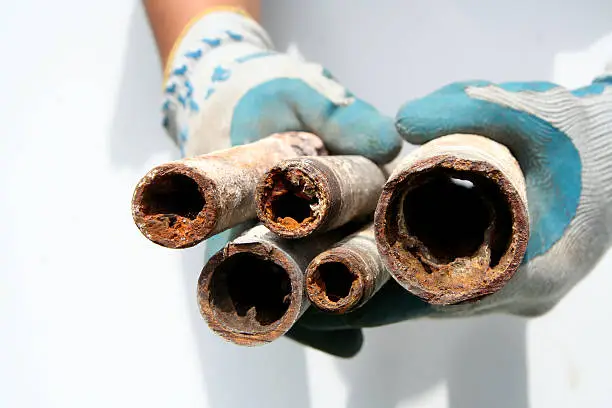
- Pitting: The caustic reaction eats into rust and scale already lining the pipe, then into the iron beneath it.
- Pinhole leaks: Pits become weep holes inside a wall or under a slab, where you will not see them until a stain appears. That is a leak detection call, not a drain call.
- Wall thinning: Repeated dosing over years thins the pipe until a section fails, which is when repiping enters the conversation.
PVC and ABS
Standard in newer builds across Polk and Hillsborough counties.
- Softening: The heat from the reaction softens plastic, and softened plastic deforms under the weight of standing water.
- Joint failure: PVC joints are solvent welded. Heat and caustic exposure at a joint weakens that bond, and a joint that lets go inside a wall floods before you notice.
- Warping at the trap: The P trap holds the chemical longest because it holds water by design.
Seals, Gaskets and Wax Rings
The parts nobody thinks about until they leak.
- Toilet wax rings: Caustic product poured into a toilet degrades the wax seal between the toilet and the flange. The result is a slow leak at the base and eventually a toilet repair call.
- Rubber gaskets and slip joint washers: These are the sacrificial parts under a sink, and they go first.
- Garbage disposal seals: The disposal sits full of chemical because the chamber does not drain, which is a different problem than a disposal backed up with standing water.
Septic Systems and Drain Fields
Polk County runs heavily on septic, and this is where one bottle of drain cleaner turns into the most expensive repair on this page.
- Bacteria die off: A septic tank works because bacteria digest solids. Caustic cleaner kills them.
- Solids carry over: With digestion stalled, solids move into the drain field.
- Field clogging: A clogged field does not recover on its own. Ours is the crew you call for drain field repair, and we would rather talk you out of the bottle than sell you the repair.
- Drano’s own position: Its FAQ lists only Max Build-Up Remover as suitable for septic systems. The clog removers are not on that list.
How to Flush Drano Out Safely Right Now
If the product is still sitting in your drain, work in this order.
- Stop using the fixture. Do not run the disposal, do not flush, do not add water pressure to a line holding caustic liquid.
- Open a window and turn on the exhaust fan. Ventilate before you put your face near the drain.
- Put on gloves and eye protection. Splash-back is the actual injury risk here, not fumes.
- Run cold water slowly if the drain accepts any flow at all. Cold, not boiling. Boiling water can crack porcelain and warp PVC, and it accelerates the reaction you are trying to end.
- Keep it running several minutes to dilute and carry the product out. Dilution is the goal.
- Stop if the water level rises instead of falling. That means the line is blocked and you are now filling it.
- Do not add a second product. Mixing drain cleaners, or mixing one with bleach or ammonia, produces toxic gas. This is the step that sends people to the emergency room.
- Call a plumber if the drain will not take water. Standing caustic liquid in a blocked line is an emergency plumbing situation, and we will tell you what to do before we arrive.
Can I Plunge or Snake a Drain After Using Drano?
Not while the chemical is still in the line. Every method of clearing a drain by hand moves the liquid toward you.
- Plunging: A plunger works by pressure. Pressure sends caustic liquid straight back up through the drain opening at your face and arms.
- Snaking: A cable pushed through standing lye comes back out coated in it, and it flicks as it spins. Gloves alone are not enough.
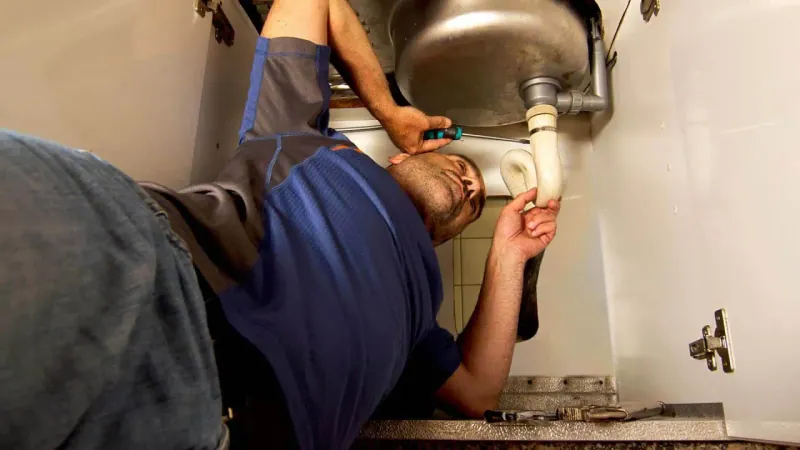
- Removing the P trap: Pulling the trap dumps whatever is sitting in it into the bucket, your hands and the cabinet floor.
- After a full flush: Once the line has been diluted with running water and you are confident the chemical is gone, mechanical clearing is fine, and it is what should have happened first.
Tell your plumber you used a chemical cleaner. We ask for a reason. It changes how we open the line and what we wear.
What Plumbers Use Instead of Drano
We do not carry chemical drain cleaner on the truck. These are the tools that go into a clogged line instead.
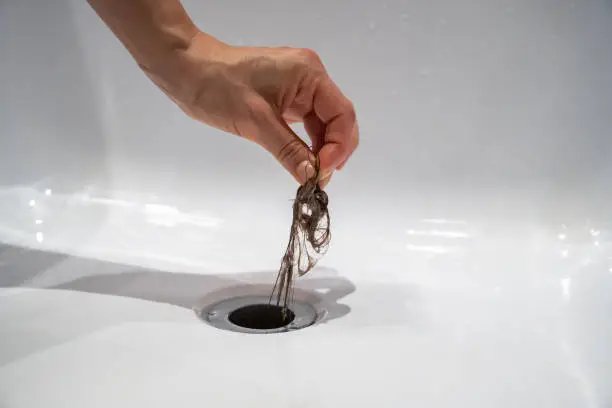
- Cable machine: A motorized auger cuts through and retrieves the clog. Hair and soap clogs come out whole. Our article on what eats through hair in a drain covers why chemicals struggle with hair specifically.
- Hydro jetting: High pressure water scours grease and scale off the pipe wall and restores full diameter. Chemicals bore a channel through a clog; jetting removes it.
- Camera inspection: Before clearing a recurring clog, we look. A clog that returns every few weeks usually has a cause, like a belly in the line or root intrusion, and no chemical addresses that.
- Enzyme maintenance products: Slow acting, bacteria based, safe for septic. They prevent build-up rather than clearing an existing blockage.
- A drain strainer: Unglamorous and the single most effective thing on this list. See tips to keep your drains from getting clogged.
Professional drain cleaning costs more than a bottle and lasts longer than one. If cost is the reason the bottle keeps winning, we offer financing, and our True Home Membership includes maintenance that keeps drains from reaching this point.
Signs Drano Has Already Damaged Something
Right away:
- Chemical smell that lingers after the drain has been flushed
- Discolored water coming from the drain
- Visible etching or dulling on the sink, tub or fixture finish
- Gurgling or bubbling from pipes after use
Over the following weeks:
- Drainage slower than it was before you used the product
- Water backing up in a different fixture when you run this one
- Staining spreading around the drain opening
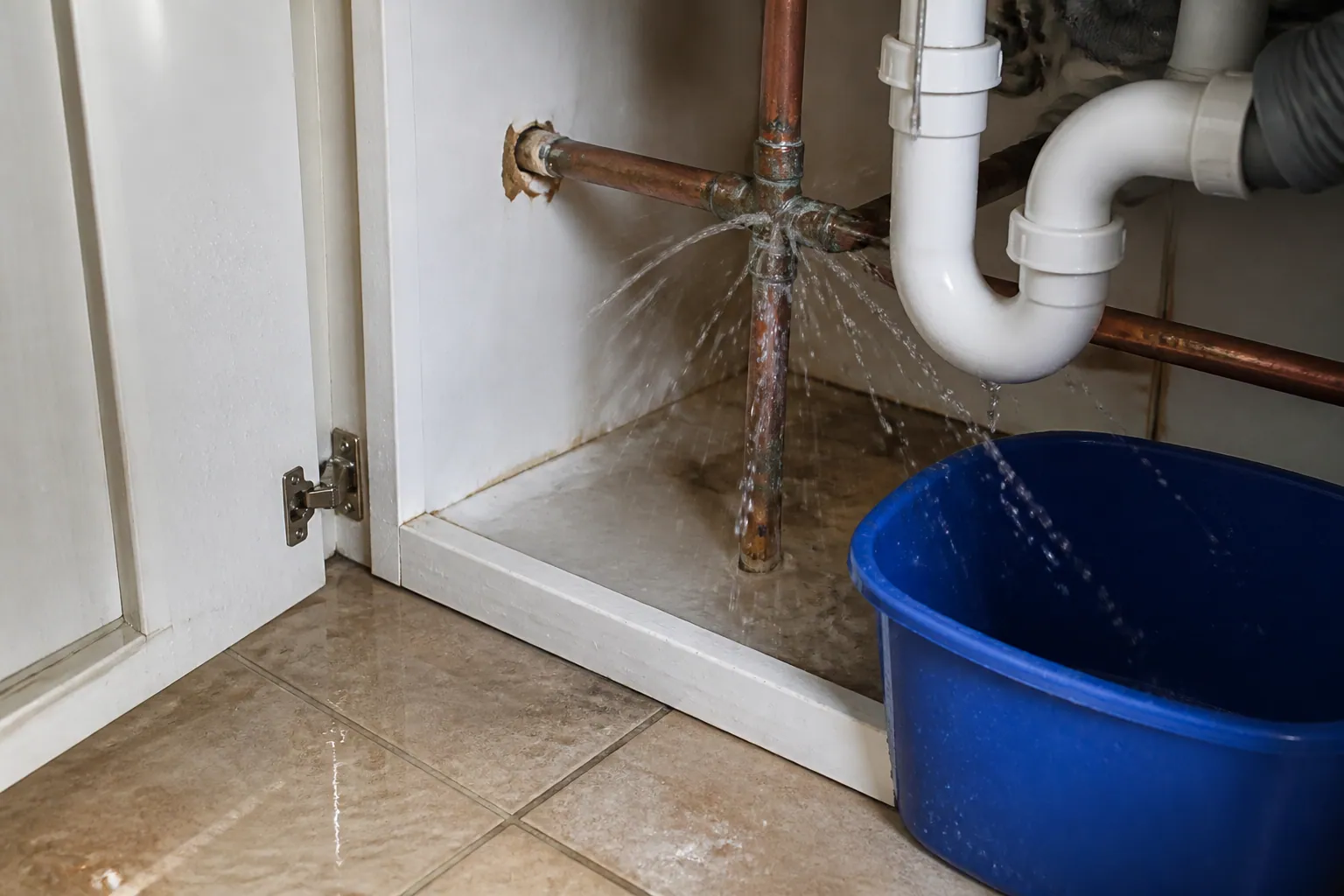
- Damp cabinet floor or a musty smell under the sink
Serious enough to stop and call:
- Water appearing under a sink or around the base of a toilet
- Multiple drains affected at once
- Sewage odor moving through the house
- Visible corrosion on any exposed pipe
- Water coming up from the shower drain when you use another fixture
When to Call a Plumber
Call if any one of these is true. You do not need all of them.
- The drain did not clear after one 30 minute treatment. A second dose adds chemical to a line that already cannot move it.
- Chemical is sitting in a fixture that will not accept water. This one is urgent.
- More than one drain is slow at the same time. That is a main line problem, not a fixture problem.
- Water backs into the tub or toilet when you run a sink. Same conclusion.
- You are on septic and used a caustic cleaner. Have the system looked at before the field is involved.
- You see standing water anywhere it should not be. Damp drywall, a warm spot on the slab, or a cabinet floor that stays wet.
- Sewage smell throughout the house. Venting or main line, and neither is DIY.
- The same drain clogs again within days. Something structural is causing it.
True Plumbers & AC has served Central Florida since 2009, and drain calls that started with a bottle are a steady part of the work. We are licensed under CFC1428965 for plumbing and CRC1335717 for HVAC. Call (863) 667-6364 or schedule online.
Prevent the Next Clog Instead
- Kitchen: Never pour grease down a drain. Use a strainer. Run water while the disposal runs, and after.
- Bathroom: A hair catcher in the shower prevents most of what we cable out.
- Toilets: Only waste and toilet paper. Our list of things you should never flush covers the rest, including the wipes labeled flushable.
- When a toilet clogs: Clear it without a plunger before reaching for chemicals, which do not belong in a toilet at all.
- Tank and fixture maintenance: Mineral scale is its own slow problem. See how to clean your toilet tank.
- The broader case: We wrote separately on why store bought drain cleaners are a bad idea.
Frequently Asked Questions
Q: How long is too long to leave Drano in a drain?
Anything past 30 minutes is too long. Drano’s own FAQ says to let the product work 15 minutes for a slow drain and 30 minutes for a tough clog, then flush with hot water. Past that window the lye keeps reacting against pipe walls, seals and fixture finishes instead of the clog.
Q: Is Drano bad for pipes?
Yes, Drano can be bad for your pipes. Its FAQ says it will not harm plastic or metal pipes when used as directed, but the risk sits in the word directed. Left sitting, the caustic reaction pits older cast iron and galvanized steel and softens PVC and its solvent-welded joints.
Q: Is Drano safe for septic systems?
Not the standard clog removers. Drano lists only its Max Build-Up Remover as septic safe. Caustic products kill the bacteria your drain field depends on to break down solids, and a stalled tank pushes untreated waste into the field where repairs cost far more than a drain cleaning.
Q: Can I plunge or snake a drain after using Drano?
Not while the chemical is still in there. Plunging drives caustic liquid back up at your face, and a snake pushes through standing lye and pulls it out coated. Flush the drain with cold water first, wear eye protection and gloves, and never mix in a second cleaner.
Q: What do plumbers use instead of Drano?
Mechanical clearing, not chemicals. A cable machine cuts through a hair or grease clog and hydro jetting scours the pipe wall back to full diameter. Both remove the blockage rather than eating a channel through it, which is why a jetted line stays clear far longer.
Q: What should I do if I left Drano in overnight?
Stop using that fixture, ventilate the room, and run cold water down the drain for several minutes if it will accept water at all. Do not add another product and do not plunge. If the drain will not accept water, call a plumber before anything else.
Get the Line Cleared Properly
Stop dosing the drain and let us open it. Same-day service across Polk and Hillsborough counties, upfront pricing before the work starts.
If the cleaner is already sitting in a Lakeland or Polk County line, call (863) 667-6364 and ask for drain cleaning. Say that you used a chemical so the technician is ready for it.
True Plumbers & AC - Licensed CFC1428965 and CRC1335717, serving Central Florida since 2009.
Our services
If you left Drano in the drain too long
A machine pulls the clog. More chemical does not. These are the three calls we take when a bottle sat overnight or the drain still will not move.
- Drain Cleaning We snake or hydro jet the line. The clog comes out instead of sitting under leftover lye. See this service
- 24/7 Emergency Plumbing Standing water at 11 p.m. is a dispatch call. A live person picks up. See this service
- Leak Detection Lye that sat too long can pit cast iron. If a stain showed up after, we find that leak. See this service