
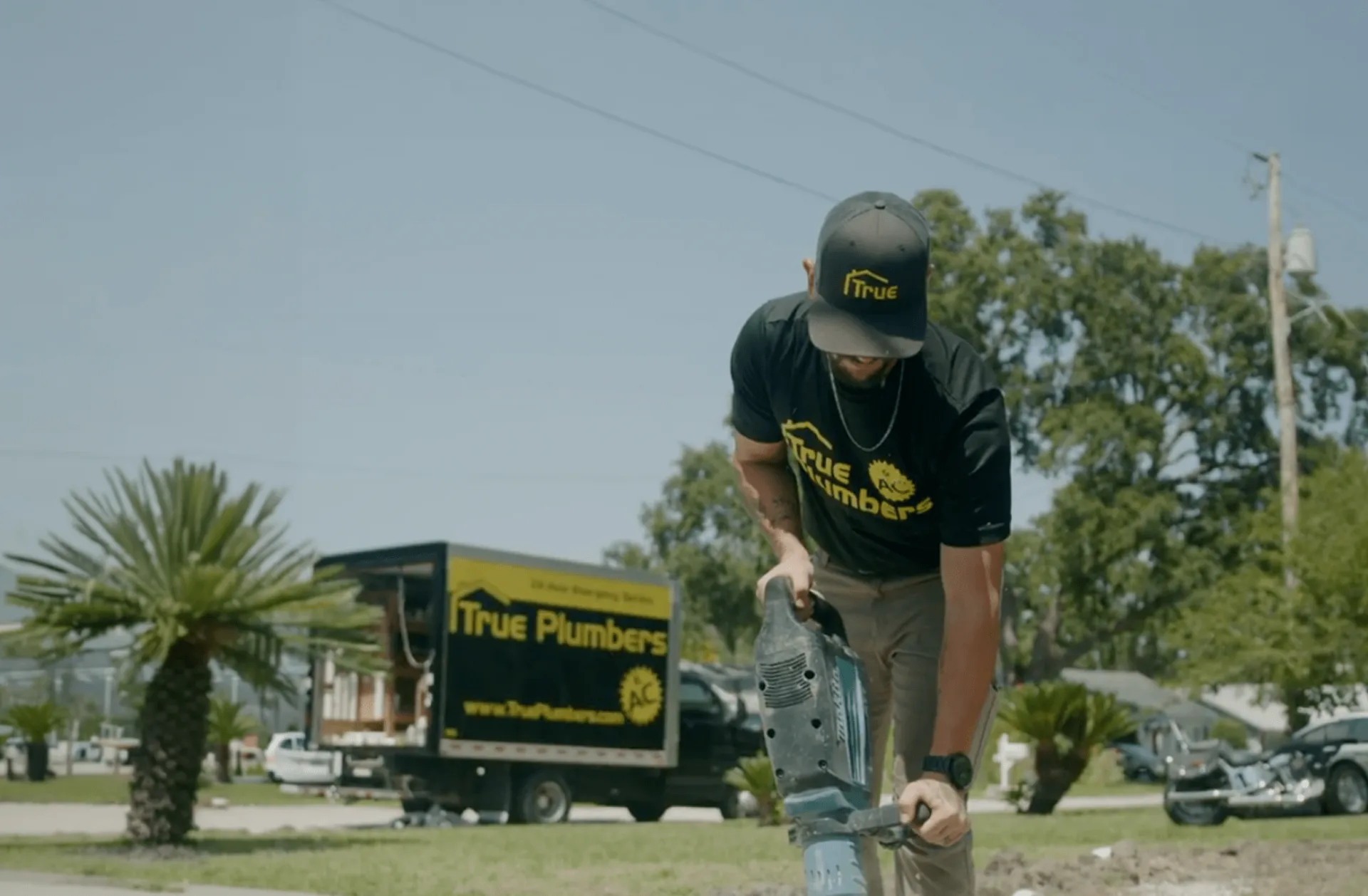

Perez Testimonial. True Plumbers clears a stoppage for a Lakeland homeowner two days before Thanksgiving, and the family shares how it went.
Professional Drain Cleaning Across Polk County
When a clog starts to build up, it won't fix itself. Searching for drain cleaning near you is your first smart step, and from there our team will clear the blockage and keep your plumbing flowing freely. Backed-up sinks, slow drains, and standing shower water all point to the same thing: a line that needs professional attention before it turns into a bigger mess.
When drains back up, it's more than an inconvenience; it's a health hazard and a potential property damage risk. At True Plumbers & AC, we specialize in professional drain cleaning using advanced equipment and proven techniques to eliminate clogs and prevent future blockages across Plant City, Wesley Chapel, Lakeland, and Winter Haven.
We handle everything from kitchen sinks and bathroom drains to toilets and main sewer lines, with same-day availability when you need it. Most jobs are completed in under an hour, and we provide upfront pricing before any work begins so there are no surprises.
Our services
Why homeowners hire us for drain cleaning
We clear the line with a snake or a hydro jetter and test flow before we leave. No second bottle of drain opener.
-
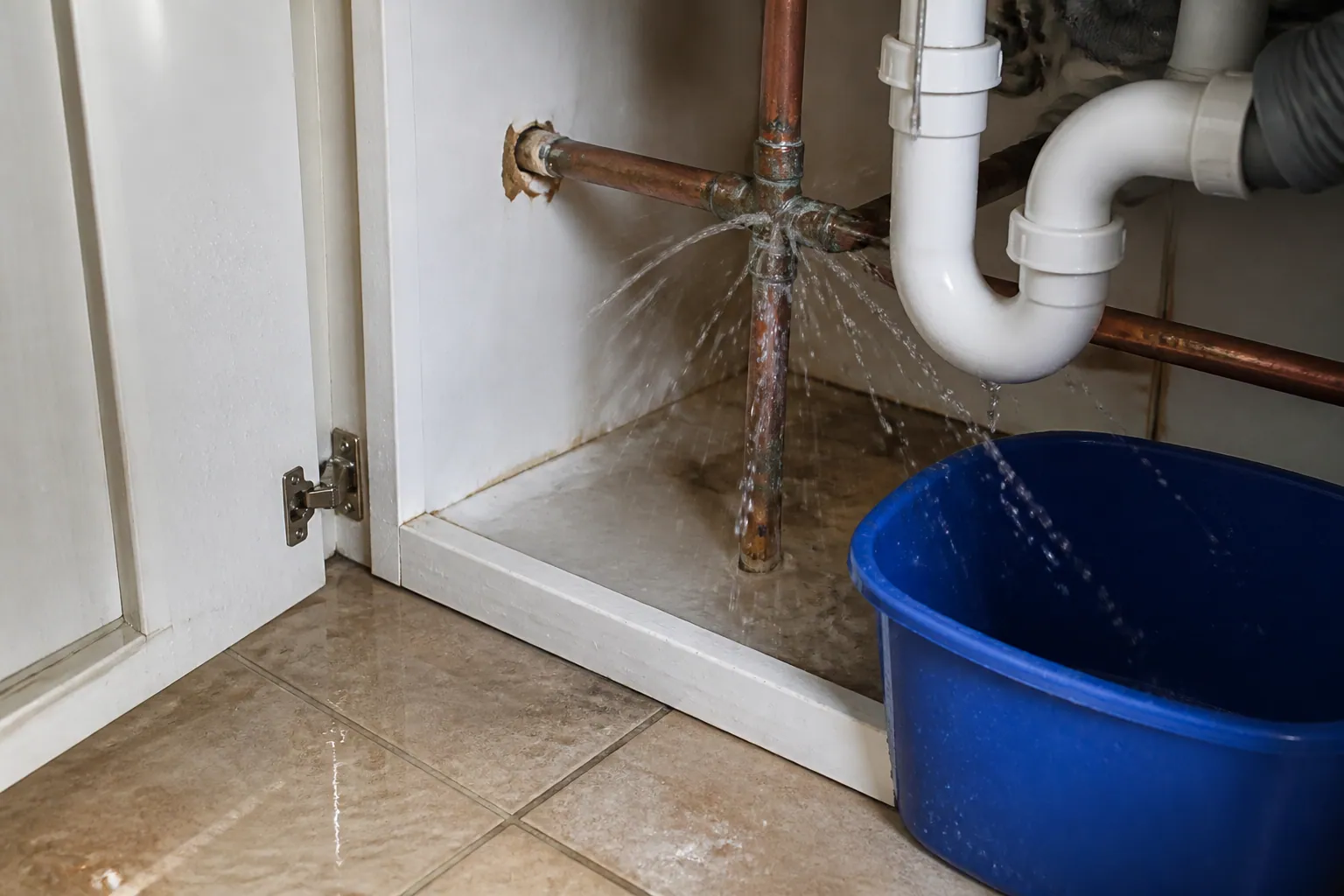 24/7 Emergency Plumbing Backup at night or a house that will not drain. Same crew, after hours.
See this service
24/7 Emergency Plumbing Backup at night or a house that will not drain. Same crew, after hours.
See this service
-
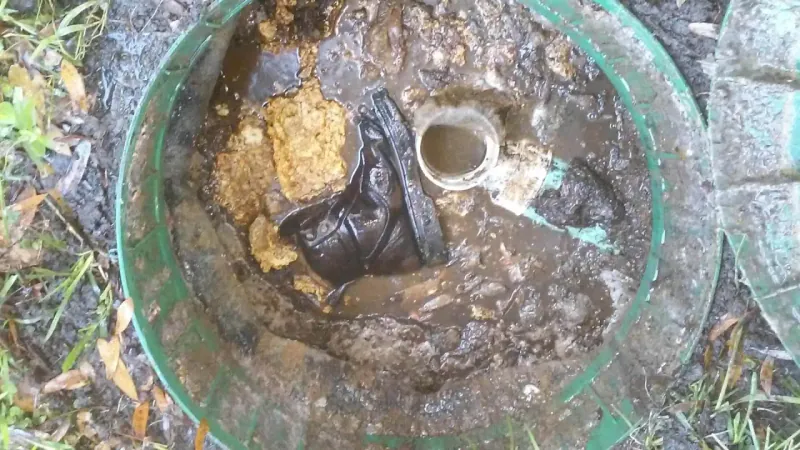 Sewer Backup Repair Sewage in a tub or shower means the main. That is a sewer backup repair, not a sink clog.
See this service
Sewer Backup Repair Sewage in a tub or shower means the main. That is a sewer backup repair, not a sink clog.
See this service
-
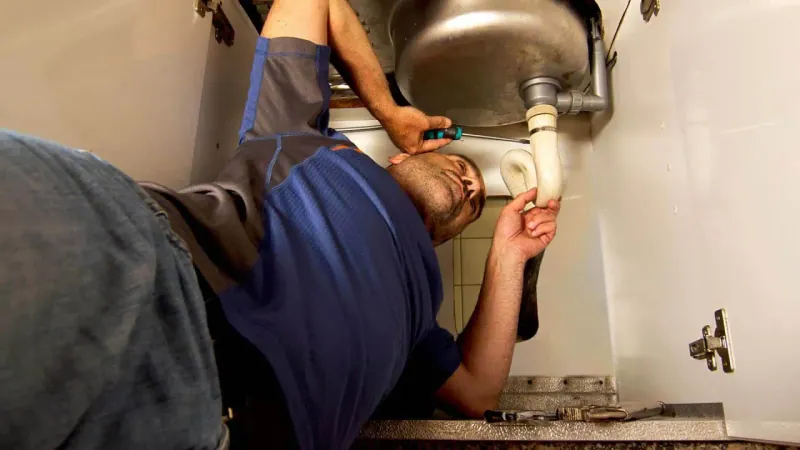 Leak Detection A drain that keeps clogging after we clear it can be a belly or a break. Camera next, then we say so.
See this service
Leak Detection A drain that keeps clogging after we clear it can be a belly or a break. Camera next, then we say so.
See this service
Key Takeaways
The short version, for anyone standing over a sink that will not empty. Stop pouring chemicals in, work out whether it is one fixture or the whole house, and book the right service. You can schedule drain cleaning online or call (863) 667-6364.
- One slow fixture is a local clog: the trap or that branch line is packed. A snake clears it, usually in under an hour.
- Two or more fixtures backing up is a main line problem: the blockage is downstream of everything, and snaking one drain will not touch it.
- Water coming up from a shower drain when you flush is the clearest main line signal there is. Stop using water and call.
- Skip the store-bought chemicals: they sit in the trap, corrode the pipe and leave a caustic pool for whoever opens it next.
- Market rates: roughly $100 to $275 for a simple sink, tub or shower clog and $300 to $600 to snake a main sewer line. Third party figures, not ours.
- We price before we start: you get a flat quote in writing and approve it before any work begins.
Hair, Grease, and the Main Line in Lakeland
Most Lakeland drain calls split three ways. Hair and soap in one shower trap is a snake job, usually under an hour. Grease in a kitchen line is a different mass. It coats the pipe and a chemical bottle sits on top of it. Several fixtures slow at once, or water rising in the shower when you flush, is the main line. Sewer backup repair is that ticket, not another pass at one sink.
Houses here sit on a sand slab. A clog that keeps coming back is often the pipe, not the hair you can see. We tell you that on site. Call (863) 667-6364 for drain cleaning in Lakeland, or the 24 hour plumber line if sewage is already on the floor.
Signs You Need Drain Cleaning Fast
You don't have to wait for a full backup to know something is wrong. A slow or noisy drain is usually the first warning that buildup is narrowing the line. Call us if you notice any of the following:
- Slow-draining water in sinks, tubs, or showers
- Gurgling or bubbling sounds when using plumbing
- Bad odors coming from drains
- Standing water after using a fixture
- Overflow or water backing up into other drains
- Frequent toilet clogs
When to Call a Plumber Instead of Clearing the Drain Yourself
Call a plumber the moment the problem stops being about one fixture. A plunger and a hand auger are genuinely enough for a single slow sink or a toilet that clogged after one bad flush. Anything on the list below means the blockage is further down the system than any tool you own can reach, and continuing to work on it from the fixture end usually makes the eventual repair more expensive.
Each of these is a symptom-conditional trigger. If the condition matches what your house is doing right now, that is the call.
- If two or more fixtures are slow or backing up at the same time, call. One clog cannot affect two branches, so the blockage is in the main line that serves both.
- If water rises in the shower or tub when you flush the toilet, call and stop using water. That is waste with nowhere to go, backing into the lowest opening in the house. Here is what it means when water comes up from the shower drain.
- If the same drain clogs again within a few weeks of being cleared, call for a camera inspection. Repeat clogs at the same spot mean a bellied line, a broken section, a bad slope or roots, and clearing it a third time just resets the clock.
- If you already poured a store-bought drain cleaner and it did not work, stop and call. Tell us what you used so our plumber can protect themselves. Read what happens if you leave Drano in the drain too long before you reach for a second bottle.
- If drains gurgle when nothing is running, call. Air being pulled through the trap means the line is partly blocked or the vent is obstructed, and the trap seal is about to let sewer gas into the room.
- If you smell sewage indoors, call. A dry or siphoned trap and a blocked line both produce that smell, and neither is something to live with.
- If the yard is soggy or unusually green over the sewer or septic run, call. The line is discharging underground, which is a sewer line or drain field problem, not a drain problem.
- If the backup started during or right after heavy rain, call. Storm water infiltrating a cracked lateral behaves nothing like a clog and will not stay fixed if you snake it.
- If sewage has actually come up into the house, call the 24/7 emergency line and do not clean it yourself. Raw sewage carries bacteria that need proper containment gear.
- If your home is on septic and the whole house is slow, call. The tank or field is likely full, and snaking the house line will not change that.
Common Drain Problems We Solve
Different drains clog for different reasons, and knowing the source is half the battle. Kitchen lines tend to collect grease and food, bathroom lines collect hair and soap, and main lines face bigger structural threats.
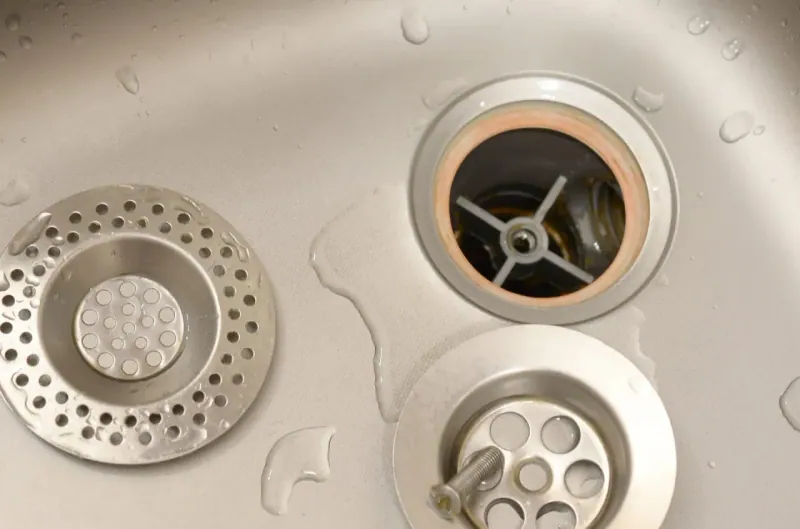
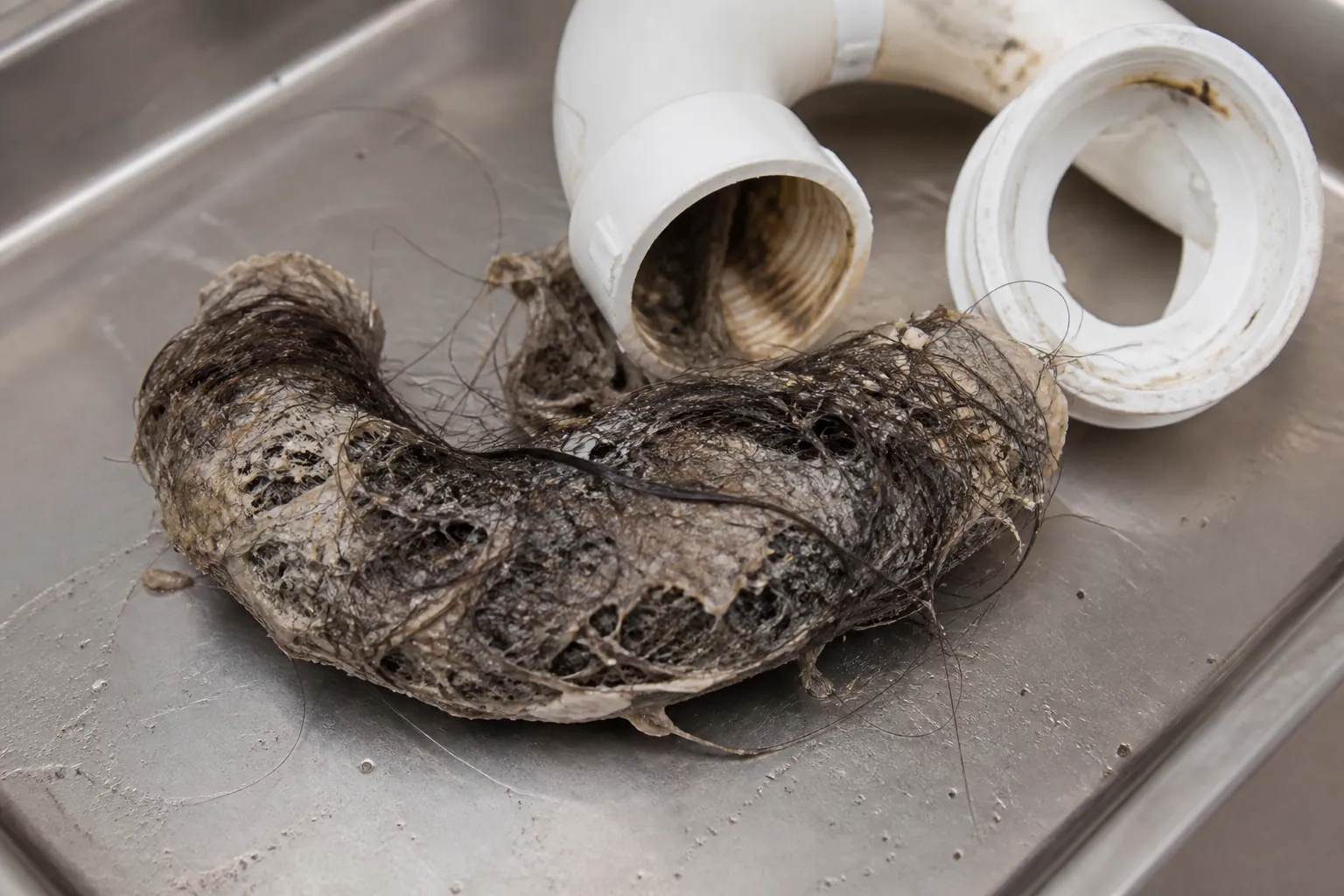
Hair is the single most common culprit in bathroom lines, and it does not dissolve. It knits into a mat around the crossbars of the strainer and catches everything after it, which is why we wrote up what actually eats through hair in a drain and why a two dollar screen prevents more service calls than anything else you can buy.
- Kitchen sink clogs: grease and food buildup, coffee grounds and debris, soap scum accumulation
- Bathroom drain issues: hair and soap blockages, toilet paper buildup, foreign objects flushed down toilets
- Main line problems: tree root intrusion, pipe scale and mineral deposits, complete sewer backups
Drain Cleaning Costs in Polk County
Clearing a simple sink, tub or shower clog runs about $100 to $275 in the wider market, with a national average near $246, according to Angi and HomeAdvisor 2026 data. A main sewer line is a bigger job and a bigger number: Forbes Home puts it at $300 to $600 to snake and $700 to $1,100 to hydro jet.
Treat the table below as market context, not as our price list. Central Florida jobs usually land inside these ranges.
| Job | Market range | Source |
|---|---|---|
| Simple sink, tub or shower clog | $100 to $275, national average about $246 | Angi and HomeAdvisor, 2026 |
| Most drain cleaning jobs overall | $147 to $352 | Angi and HomeAdvisor, 2026 |
| Snaking a drain, general range | $125 to $360 | Forbes Home |
| Snaking a bathtub drain | $165 to $250 | Forbes Home |
| Clearing a toilet clog | $150 to $300, average about $225 | Forbes Home |
| Snaking a main sewer line | $300 to $600 | Forbes Home |
| Tough main line clog by snake | $500 to $800 | Forbes Home |
| Main sewer line clog repair, national average | $380 | Angi |
| Hydro jetting | $300 to $1,100 overall, and $700 to $1,100 for a sewer line, national average about $700 | Forbes Home |
| Sewer camera or video inspection | $300 to $1,200 depending on line length and cleanout access | Forbes Home |
Sources: Angi and HomeAdvisor 2026 data, and Forbes Home. These are published third party market figures for plumbing generally. They are not True Plumbers pricing and none of them is a quote.
How We Price a Drain Cleaning Job
We quote the job, not the hour. Our plumber looks at what is actually happening, tells you whether it is a branch clog or a main line problem, and gives you a flat price in writing for the repair. You approve that number before any cable goes down the pipe, and it does not move because the job ran long.
If a camera inspection shows the real problem is a broken or root-packed line rather than a clog, we separate the two clearly: here is what it costs to get you flowing tonight, and here is what it costs to fix the cause. For the larger repairs, ask about plumbing financing before we start so the payment plan is part of the same conversation.
To get an actual price for your home, call (863) 667-6364 and ask for a quote. Every figure in the table above is somebody else's published market research. The only number that applies to your house is the one our plumber writes down after looking at it.
Why Professional Drain Cleaning Beats DIY Methods
Store-bought drain cleaners offer only temporary relief and can actually damage your pipes over time. Professional drain cleaning removes the clog completely instead of just punching a hole through it, and it's done with methods that protect your plumbing system.
Our technicians also use advanced equipment like hydro-jetting and video inspection, which lets us identify underlying issues before they become expensive repairs.
- Complete clog removal, not just temporary clearing
- Safe methods that protect your plumbing system
- Advanced equipment like hydro-jetting and video inspection
- Identification of underlying issues before they become expensive repairs
Our Advanced Drain Cleaning Process
We follow a consistent, methodical process so the clog is gone for good and you understand exactly what we found.
- Diagnostic inspection: we identify where the blockage is, whether in a specific drain or your main sewer line, using years of field experience and optional video inspection tools.
- Mechanical snaking: for localized clogs, we use drain snakes to break up and remove the blockage without damaging your pipes.
- Hydro-jetting if needed: for deep or stubborn clogs like grease, sludge, or tree roots, we use high-pressure water jetting to clear the entire line, not just poke a hole through the blockage.
- Post-clean testing: we verify water flow, test for pressure, and ensure the issue is fully resolved before we leave.
- Prevention tips: we explain what caused the clog so you can keep it from coming back.
Hydro-Jetting: The Ultimate Drain Cleaning Solution
For the toughest blockages, hydro-jetting is the most thorough option available. High-pressure water scours the inside of the pipe walls, removing years of buildup and restoring the line close to its original diameter.
It is especially effective for restaurants and commercial kitchens where grease accumulates quickly, and it clears tree roots and mineral deposits that a standard snake cannot fully remove.
- Removes years of buildup from pipe walls
- Clears tree roots and mineral deposits
- Restores pipes to like-new condition
- Prevents future blockages longer than traditional methods
Emergency Drain Backup: What to Do Before We Arrive
Stop putting water into the system, then contain what has already come out. Every flush, shower and dishwasher cycle from here on goes straight to the lowest opening in the house, so the single most useful thing you can do is get everyone to stop using water while you wait.
A backup that has reached the floor carries bacteria that need containment gear, so we handle it on the 24/7 emergency plumbing line. If you want the background on how a main line gets to this point, clearing the main drain line in your house and the five warning signs of a sewer line problem both explain what we are looking for when we arrive.
- Stop all water use in the house. Tell everyone: no flushing, no showers, no laundry, no dishwasher. This alone stops the backup from getting worse.
- Turn off the washing machine and dishwasher mid-cycle if either is running. Both dump a large volume at once and will overflow a blocked line immediately.
- Keep people and pets out of the affected room. Raw sewage carries bacteria, and a wet tile floor with waste on it is exactly how it spreads through the house.
- Do not pour a chemical drain cleaner into standing water. It will not reach a main line blockage, and it turns the water on your floor into a caustic hazard for you and for our plumber. Here is why store-bought drain cleaners are a bad idea.
- Photograph everything before you touch it. Your insurer will want images of the water line on the wall, the affected flooring and any damaged contents.
- Move furniture, rugs and boxes out of the water if you can do it without wading through it. Cardboard wicks, and anything porous that sits in sewage is usually a loss.
- Find your outdoor cleanout and clear access to it. It is a capped pipe sticking up in the yard, usually between the house and the street. Our plumber will work from there, and finding it in daylight saves time.
- Do not open the cleanout cap yourself. If the line is full and under pressure, everything backed up behind it comes out at once, at ground level, into your yard.
- Shut off power to the room at the breaker if water is near outlets or an appliance. Then stay out and call an electrician, because we do not perform electrical work.
- Write down what happened just before it started: heavy rain, a laundry load, a specific flush. That detail often points straight at the cause.
What Drains We Unclog
We clear residential and commercial drains throughout the home and property, from the smallest bathroom sink to the main sewer line that ties the whole system together.
- Bathroom drains: sinks, showers, tubs, toilets
- Kitchen drains: sinks, disposals, dishwashers
- Laundry drains: utility tubs and washer drains
- Outdoor and floor drains: garage, patio, or yard drains
- Main sewer lines: for whole-home backups or gurgling drains
Drain Cleaning in Lakeland, Plant City, Winter Haven, Bartow, Auburndale and Davenport
Drains fail differently depending on which part of Polk County you live in, because the housing stock, the soil and the sewer infrastructure are not the same across the county. Here is what we run into town by town.
Lakeland has the county's oldest housing and its biggest oaks, and the two combine badly. Cast iron and clay laterals in the neighborhoods around Lake Morton, Dixieland and Lake Hollingsworth have been in the ground long enough to scale up internally and open joints at the seams, and mature oak roots find those joints and fill the pipe. The pattern is a main line that snakes clear easily and then re-clogs within a month or two, which is a root problem rather than a grease problem. We camera the line first, then water jet it to cut the roots back to the pipe wall instead of just boring a hole through them.
Plant City splits into two very different jobs. In town, the older homes off Reynolds Street and around the historic district have the same cast iron and root issues as Lakeland. Out on the rural edges toward Dover, Springhead and Knights, properties are on septic rather than city sewer, so a whole-house slowdown is usually a tank or field question. Snaking the house line on a septic property with a full tank changes nothing, which is why we check the system type before we quote. Plant City is also hard-water and well country, and heavy mineral scale narrows drain and waste lines over the years the same way it crusts a shower head.
Winter Haven sits on the lake chain with a groundwater table that comes right up in the rainy season. From June through September, any crack or bad joint in a sewer lateral lets storm water infiltrate the line, so we see backups that only happen during and after heavy afternoon storms and behave perfectly the rest of the year. That is not a clog, and it will come straight back if you treat it like one. A camera run right after a storm shows exactly where the water is getting in.
Bartow, southwest of Lakeland, has a large stock of pre-1970 homes and a long phosphate-industry history in the surrounding land. The drain issues there are mostly age: original cast iron waste stacks that have rusted thin and scaled down to a fraction of their original diameter, so the line clogs on things it used to pass without trouble. When a Bartow house clogs monthly on ordinary use, the pipe is usually the problem rather than what went down it. Bartow sits inside our Lakeland service area.
Auburndale, between Lakeland and Winter Haven, is a mix: older lakefront homes with aging laterals and newer subdivisions on modern PVC. The newer builds rarely clog structurally, so those calls are almost always grease from the kitchen or hair and soap in the bathroom, both of which respond to a straightforward snake. The older sections behave like Winter Haven, with root and infiltration issues in the laterals. Auburndale is served out of our Winter Haven coverage.
Davenport is the opposite problem. It is one of the fastest-growing parts of Polk County, full of newer construction and a heavy concentration of short-term rental homes near the Highway 27 corridor. The pipe is modern and the soil is sandy, so structural failure is rare. What we see instead is volume abuse: guest turnover with wipes, sanitary products and cooking grease going down lines that were never sized for a rotating cast of people who do not live there. For rental owners, scheduled preventive jetting between seasons costs a great deal less than an emergency call during a booking.
Wherever you are, a drain that keeps coming back usually means the pipe itself is damaged. Our tips to keep your drains from getting clogged cover the habits that prevent most of these calls, and if the line turns out to be leaking rather than blocked, we trace it with non-invasive leak detection before anyone digs.
More from the field

Commercial Drain Cleaning With Water Jetter Technology. Grease and food down the drain is a recipe for disaster for a restaurant. How True Plumbers jets commercial lines clean before they shut a business down.
Read the transcript ▼
there's nothing worse than how to close down your restaurant or leave your home because your plumbing isn't working dumpin food and grease down your drains it's a recipe for disaster if you have an emergency of course we'll be there fast to fix the problem but why wait at your plumbers we value your business so give us a call today we're on the way true plumbers we're on the way rated Central Florida's number one plumbing service

Brad Sees the True Plumbers Jetter in Action. A customer watches the hydro jetter clear his line in real time on a True Plumbers job.