How Do You Clean a Toilet Tank?
Shut off the water, flush the tank empty, soak the inside with distilled white vinegar, scrub, then refill and flush twice. Most of the elapsed time is the soak, not the work.
Almost nobody looks inside a toilet tank, so appearance is not the point. Every moving part your toilet depends on lives in there, sitting in water, and in Central Florida that water carries a lot of dissolved mineral.
Key Takeaways
- Use vinegar, never bleach. Bleach destroys the rubber and plastic parts that make the toilet work.
- Shut off the supply valve first. Every other step depends on it.
- Twice a year is the baseline. Every three to four months on hard or well water.
- Scale lands on the parts that move. The flapper, the fill valve and the flush valve seal, not just the porcelain.
- A toilet that runs after cleaning needs a part, not another scrub.
- If scale returns within weeks, treat the water, not the tank.
Why the Inside of the Tank Matters
The tank holds the flapper, the fill valve, the flush valve, the float and the overflow tube, and all of them sit submerged between flushes.
- The flapper: A rubber seal that lifts to release water and drops to seal the flush valve. Scale and chemical damage both make it stop sealing, which is the single most common cause of a running toilet.
- The fill valve: Refills the tank after a flush. Mineral deposits inside it cause slow fills, whistling and the toilet that refills by itself every few minutes.
- The flush valve seat: The rim the flapper seals against. Grit on that surface holds the flapper open by a hair, which is enough to leak.
- The float: Sets the water level. Buildup on the arm or cup throws the level off, so the tank either underfills and flushes weakly or overfills into the overflow tube.
- The tank bolts and the tank-to-bowl gasket: Corrosion here shows up as water on the floor behind the toilet, which reads like a leak but is a hardware problem. If you are seeing that, our toilet repair crew handles it in one visit.
Odor is the other reason. Biofilm and standing sediment in a neglected tank produce a smell that pushes out into the bathroom every time the toilet is used, and no amount of scrubbing the bowl fixes it, because the source is upstream.
What Florida Hard Water Does to Tank Components
Central Florida draws its water from the limestone Floridan aquifer, and limestone means dissolved calcium carbonate. The USGS classifies water above 180 mg/L of calcium carbonate as very hard. That mineral does not stay dissolved forever. It precipitates onto surfaces, and inside a toilet tank it precipitates onto rubber and plastic.
- White or chalky crust: Calcium scale. It builds on the fill valve, the float and the waterline ring around the tank.
- Orange or brown staining: Iron and manganese in the supply, common on well water across rural Polk County. It stains but does not corrode.
- Black speckling: Usually mildew or degraded rubber shedding from a flapper near the end of its life.
- Grit on the tank floor: Sediment that settles out of the supply and works its way into the flush valve seat.
Scale on porcelain is cosmetic. Scale on a flapper is not, because rubber that has hardened with mineral no longer conforms to the seat. This is the same mechanism that shortens the life of water heaters and fixtures, which we cover in how hard water could be harming your home.
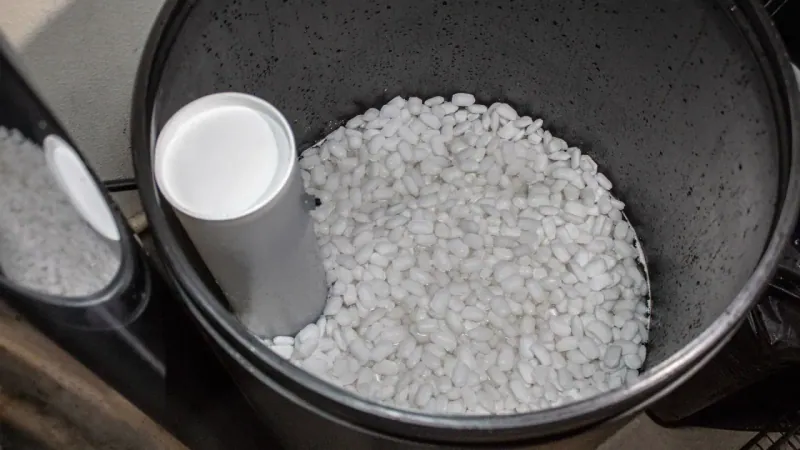
If you are cleaning the tank every couple of months and the scale keeps coming back, the tank is not the problem. A water softener treats the supply, so every fixture in the house benefits at once instead of you fighting the same deposits fixture by fixture.
What You Need
- Distilled white vinegar, roughly enough to cover the stained surfaces
- Rubber gloves
- A non-scratch sponge or a plastic-bristled brush, never wire or steel wool
- An old towel for the floor
- A wet pumice stone, only for stubborn mineral rings on porcelain and never on plastic or rubber
How to Clean a Toilet Tank, Step by Step
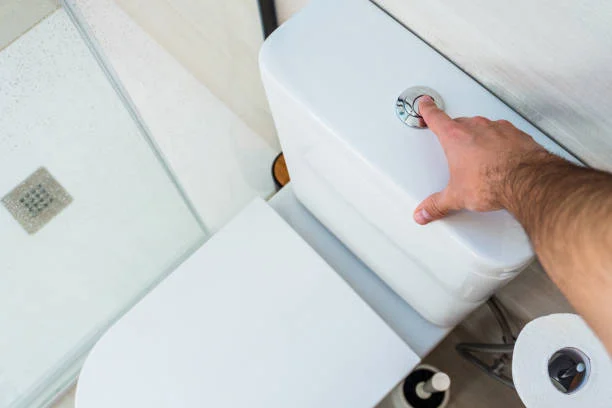
- Turn off the water supply. Find the valve on the wall behind the toilet and turn it clockwise until it stops. Do this before anything else.
- Flush and hold the handle down. Keep it held until the tank drains as far as it will go. Lift the lid off first and set it flat on a towel, not on its edge, because a dropped tank lid cracks and is not worth replacing a whole toilet over.
- Pour in the vinegar. Enough to cover the stained walls and the buildup around the fill valve. Undiluted works best on heavy scale.
- Let it soak. The Spruce recommends about an hour for light grime and overnight for heavy rust and mineral buildup. Do not use the toilet during the soak.
- Scrub the walls, the corners and the tank floor. Use the sponge or plastic brush. Work around the flapper and fill valve rather than scrubbing them hard, and wipe the flush valve seat clean with a gloved fingertip so nothing grit-sized is left holding the flapper open.
- Turn the supply back on. Counterclockwise, and let the tank refill completely.
- Flush two or three times to rinse. Watch the tank refill on the last flush and check that the water stops at the fill line and the flapper drops flat and seals.
What Never to Put in a Toilet Tank
- Chlorine bleach: Degrades the rubber flapper, the gaskets and the plastic valve components sitting in the water.
- Drop-in bleach tablets: The worst of the category, because they dissolve continuously and hold a bleach concentration in the tank permanently. Fluidmaster, which manufactures toilet tank components, warns that bleach in these tablets breaks down flappers, fill valves, flush valves and seals, and that the resulting damage causes leaks. Southern Living gives homeowners the same advice, that bleach products corrode plastic and rubber gaskets.
- Any product mixed with another product: Vinegar plus bleach produces chlorine gas. Never combine cleaners in a confined bathroom.
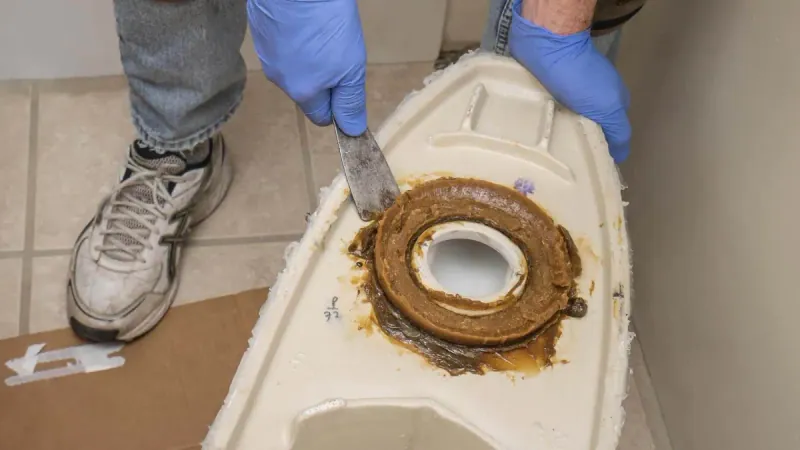
- Chemical drain cleaners: They do not belong in a toilet at all. They attack the wax ring under the toilet, and we go into the detail in what happens if you leave Drano too long.
- Wire brushes, steel wool or abrasive powder: They scratch porcelain, and a scratched surface collects mineral faster than a smooth one.
- Dyed tank tablets: Even the ones without bleach mask leaks by making it impossible to see clear water seeping into the bowl.
How Often to Clean the Tank
- Municipal water, average hardness: Twice a year.
- Hard water or well water: Every three to four months.
- A guest bathroom used a few times a year: Twice a year still, because water sitting stagnant grows biofilm faster than water that moves.
- After any plumbing work upstream: Sediment gets stirred loose by main line repairs and lands in tanks.
- Whenever you replace a flapper or fill valve: The tank is already drained and open, so clean it while you are in there.
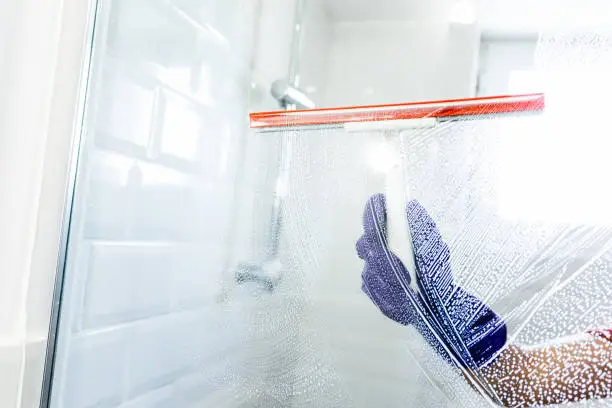
The same mineral deposits show up on shower glass and fixtures around the house. Our guides on removing hard water stains from shower glass and removing rust and mineral deposit stains use the same acid-based approach.
Signs a Part Has Failed, Not Just Gotten Dirty
Cleaning fixes buildup. It does not fix a worn component. Any of these means the tank needs a part.
- The toilet runs continuously or cycles on by itself every few minutes. The flapper is no longer sealing.
- Water trickles into the bowl between flushes with nothing touched.
- The tank takes noticeably longer to fill than it used to. Scaled fill valve.
- Hissing or whistling during the fill. Also the fill valve.
- A weak or incomplete flush even though the tank is full. Water level set too low, or a flush valve not opening fully.
- The handle needs holding down to complete a flush. Chain length or a stiffened flapper.
- The flapper feels hard, brittle or slimy and leaves black residue on your glove. Replace it.
- Water on the floor behind the toilet. Tank bolts or the tank-to-bowl gasket, and this one does not wait.
Noises in particular tell you a lot before anything visibly fails. We break down what each one means in why your toilet is making noises.
When It Is a Repair, Not a Cleaning
Call a plumber when any of the following is true.
- The toilet still runs after a thorough cleaning. A running toilet wastes water every hour until it is fixed.
- Water is on the floor at the base or behind the tank. That is a seal or a supply line, and the subfloor is at stake.
- The tank refills but the bowl level rises and falls on its own. Often a venting or partial blockage issue downstream rather than a tank issue.
- The toilet clogs repeatedly without an obvious cause. Start with unclogging it without a plunger, and if it keeps happening, the line needs drain cleaning or a camera look.
- Sewage odor persists after the tank and bowl are both clean.
- The toilet has overflowed more than once. Our guide on what to do if your toilet overflows covers the immediate steps, but a repeat is a signal.
- You suspect a hidden leak. A toilet leaking into the flange or the slab does not show itself, which is what leak detection is for.
- The toilet is old enough that parts are hard to source. At that point replacement is often cheaper, and choosing the right type of toilet is worth the read first.
An overflowing or continuously running toilet at two in the morning is an emergency plumbing call, and we take them.
Keeping the Tank Clean Between Deep Cleans
- Flush the toilet regularly in guest bathrooms. Moving water grows less film than standing water.
- Watch what goes in the bowl. What reaches the bowl does not reach the tank, but the habits overlap. See things you should never flush.
- Wipe the waterline ring during your normal bathroom cleaning. Two minutes with the lid off stops a ring from becoming a crust.
- Fix a slow drip at the supply line immediately. Constant refilling means constant fresh mineral entering the tank.
- Understand the fixture you are maintaining. What a P trap is and why you need one explains why the toilet keeps sewer gas out of the house at all.
- Treat the water if you are on a well. Softening or filtration at the supply reduces scale everywhere at once.
Frequently Asked Questions
Q: How do you clean a toilet tank?
Shut off the supply valve, flush to empty the tank, then pour in enough distilled white vinegar to cover the stained surfaces and let it soak. The Spruce recommends a soak of an hour for light grime and overnight for heavy scale. Scrub with a non-scratch sponge, turn the water back on, and flush twice to rinse.
Q: Can you put bleach in a toilet tank?
No. Bleach and drop-in bleach tablets degrade the rubber and plastic parts sitting in the tank water. Fluidmaster warns that bleach tablets break down flappers, fill valves, flush valves and seals, and Southern Living gives the same advice. A running toilet is the usual result.
Q: How often should you clean a toilet tank?
Twice a year is enough for most homes. On Central Florida well or hard municipal water, plan on every three to four months, because mineral scale accumulates faster here and lands on the parts that move rather than the porcelain that does not.
Q: What is the brown or orange stuff in my toilet tank?
Usually iron and manganese from the water supply, not rust from the toilet itself. It coats the tank walls and the fill valve. Vinegar removes it. If it returns within weeks of cleaning, the problem is the water rather than the tank, and treatment at the supply is the real fix.
Q: Is vinegar safe to pour in a toilet tank?
Yes. Distilled white vinegar is mildly acidic, which dissolves calcium scale, and it is gentle enough that it will not attack the rubber flapper or the plastic fill valve the way bleach does. It is the method recommended by The Spruce and by most plumbers.
Q: Why does my toilet still run after I cleaned the tank?
Cleaning does not restore a warped flapper or a scaled fill valve. If the toilet runs, refills on its own, or takes a long time to fill after a thorough cleaning, the part has failed and needs replacing. That is a repair, and a running toilet wastes water continuously until it is done.
Have the Toilet Looked At
If cleaning the tank did not stop the running, the odor or the leak, the problem is a part. True Plumbers & AC has handled toilet repairs across Lakeland, Plant City and the rest of Central Florida since 2009. Call (863) 667-6364 or schedule online.
Larger jobs, including whole-house water treatment, are covered by our financing options, and the True Home Membership includes the maintenance visits that catch failing tank parts before they flood a bathroom.
True Plumbers & AC - Licensed CFC1428965 and CRC1335717.
Our services
After you clean the toilet tank
Vinegar handles scale. A running toilet after a scrub is a failed part, not a dirty tank. Hard water is why it comes back.
- Toilet Repair A warped flapper or a scaled fill valve needs a part. Cleaning will not restore either one. See this service
- Water Softener If scale returns in weeks, the water is the problem. A softener cuts that mineral load. See this service
- Leak Detection Water on the floor behind the bowl is often tank bolts or the supply line, not the tank itself. See this service